
RHR Blog
Addiction Interventions in Austin: How Families Move From Worry to a Yes

Most families do not arrive at the word intervention quickly. It comes after the private conversations went nowhere, after the promises broke, after the moment you realized that waiting for him to hit bottom might mean attending his funeral first. If you are reading this page, you are probably somewhere in that progression, and you should know two things. First, what you are considering is not a betrayal; it is one of the most loving and difficult things a family can do. Second, the version of an intervention you have seen on television is not how good ones actually work.
This page explains what a professional intervention really involves, when it makes sense, how the process unfolds in the Austin area, and what happens in the critical hours after someone says yes.
What a Professional Intervention Actually Is
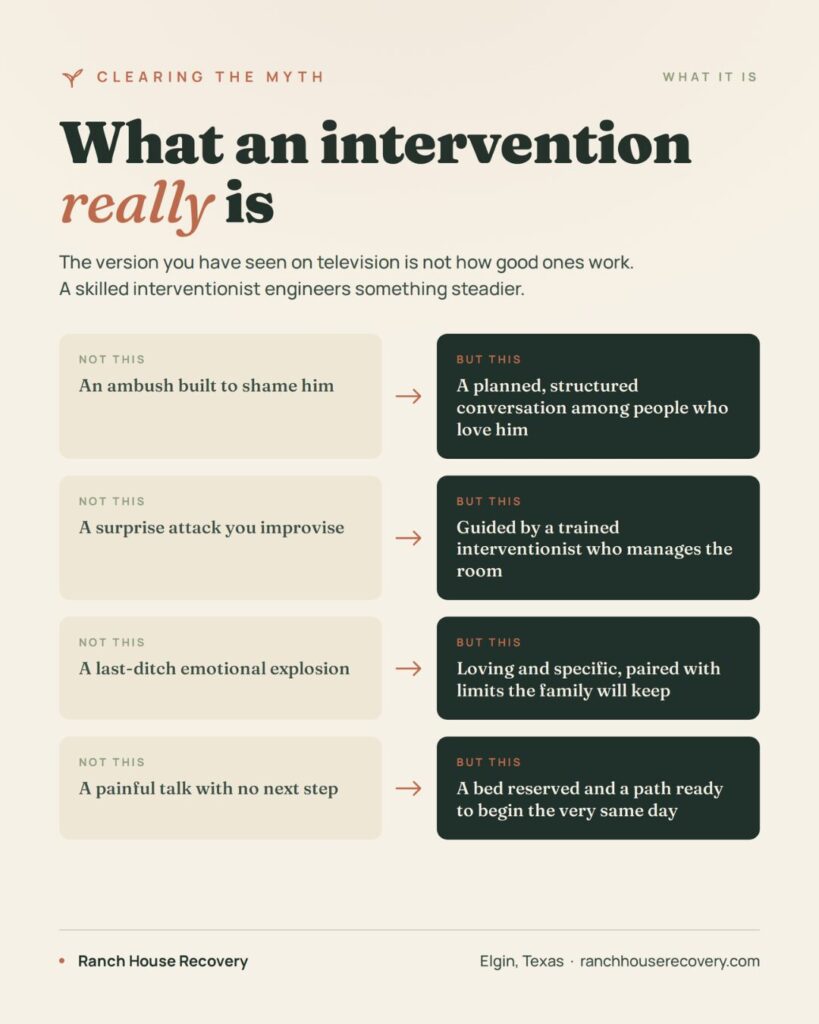
A professional intervention is a planned, structured conversation in which the people who love someone confront the reality of his addiction together, with the guidance of a trained interventionist, and present a concrete, immediate path into treatment. Every word of that definition is doing work. Planned, because the timing, location, and participants are chosen deliberately. Structured, because each person prepares what they will say in advance, usually in writing. Guided, because a skilled interventionist manages the room, keeps the conversation from collapsing into old family arguments, and knows what to do with every form of resistance. And immediate, because the treatment plan is already arranged: a bed is waiting, the bag can be packed, and the window between yes and admission is measured in hours, not weeks.
What it is not: an ambush designed to shame someone, a surprise attack, or a last-ditch emotional explosion. Research on family-based approaches compiled by the National Institute on Drug Abuse consistently shows that family involvement improves treatment entry and outcomes, and that confrontation works best when it is loving, specific, and paired with consequences the family is actually prepared to keep. The interventionist’s job is to engineer exactly that.
Signs It May Be Time
Families usually know long before they act. But some markers reliably separate “we should keep talking” from “we need structured help”: direct conversations have been tried and failed more than once; the consequences are escalating, in health scares, legal trouble, job loss, or money disappearing; he denies or minimizes things you have seen with your own eyes; family members are starting to protect him from consequences just to keep the peace; or you have started planning your days around his condition. If several of those describe your house, you are not overreacting by reading this page. You are late, and that is normal too, because nearly every family is.
How the Process Works, Step by Step
1. The consultation. It starts with a phone call, not a confrontation. The interventionist or treatment program gathers the history: the substance, the duration, prior treatment attempts, mental health concerns, family dynamics, and any safety issues. This is also where honest professionals will tell you if an intervention is the wrong tool for your situation.
2. Planning and preparation. The interventionist helps the family decide who should be in the room, and just as importantly, who should not. Each participant prepares a short written statement: specific moments, specific love, specific limits. The team rehearses, because the real conversation will be the hardest hour of everyone’s year, and rehearsed people hold steady where improvising people get pulled into old patterns.
3. Treatment is arranged in advance. Before anyone sits down, the destination is set. Insurance verified, bed reserved, transportation planned. An intervention without an immediate landing spot is just a painful conversation.
4. The intervention itself. Usually held somewhere neutral and calm, often in the morning, often lasting one to two hours. The interventionist opens, family members read their statements, and the choice is presented plainly: treatment, starting today, with all of us behind you.
5. The answer, either way. Most professionally guided interventions end in a yes, more often than families dare to hope. When the answer is no, the work is not wasted: the family leaves with a unified plan, clear boundaries, and an interventionist who has seen many initial nos turn into yeses within days once the new reality settles in.
What Happens Right After a Yes
The hours after a yes are the most fragile in the entire process, and this is where the coordination between interventionist and treatment program matters most. At Ranch House Recovery, our admissions team works with families and interventionists to compress that window: benefits verified before the intervention happens, intake paperwork ready, and a same-day or next-day move-in whenever clinically possible. If medical detox needs to come first, that sequencing is arranged in advance too, so there is never a gap for second thoughts to fill.
Our program is a men’s residential program on a working ranch in Elgin, about 30 minutes east of Austin, built around long-term residential treatment rather than quick stays. For many families, the distance from the old environment is part of the point. And for the man arriving angry, scared, or both, the first week of animals, work, and other men who have sat in his exact chair does what no lecture could. The men who said yes tell that story better than we can.
If our program is not the right fit, we will say so on the first call and point you toward what is, including through the federal treatment directory at FindTreatment.gov, which lists every licensed provider in Texas.
Choosing an Interventionist in the Austin Area
A few practical markers separate skilled interventionists from expensive improvisers. Ask about training and credentials, and about which intervention models they work in, whether the classic family-confrontation style, invitation-based approaches that include the person from the start, or family-coaching methods for situations that need a slower build. Ask how many interventions they have led, what their arrangement with treatment programs looks like, and how they handle a no. And ask directly whether they receive payment from any facility for referrals; the ethical ones answer instantly, because the answer is no, the family pays the interventionist and chooses the program freely.
Treatment programs can be a good starting point for referrals, since established ones have worked alongside the same interventionists for years and know who holds up in a hard room.
Frequently Asked Questions
How much does an interventionist cost in Austin? Professional interventions in the Austin area typically run from the low thousands into five figures depending on the interventionist’s experience, the model used, and travel involved. It is a real expense, and worth weighing against what another year of active addiction costs a family in every currency that matters. Ask for the full fee structure in writing during the consultation.
Do interventions actually work? When professionally guided, the majority end with the person agreeing to enter treatment, and family involvement itself is associated with better treatment entry and retention in the research. What an intervention cannot do is guarantee what happens inside treatment. It opens the door; the program and the man walk through it.
Who should be in the room? People he loves and respects, who can stay calm, and who will keep the boundaries they state. Small children, anyone in active addiction themselves, and anyone who cannot resist old arguments usually should not attend. The interventionist makes these calls with you, and they matter as much as anything said.
What if he says no? Then the family holds the boundaries it stated, stays in contact with the interventionist, and waits with a plan instead of with panic. A meaningful share of refusals become admissions within days or weeks, because the intervention permanently changes what everyone in the family is willing to pretend.
Can an intervention be done for someone outside Texas? Yes. Interventionists travel, and a significant share of our admissions arrive from out of state, often precisely because distance from the old environment helps. Logistics, including escorted travel when relapse risk in transit is high, are part of the planning step.
If you are not ready to engage an interventionist but need to talk through options today, SAMHSA’s National Helpline at 1-800-662-4357 is free, confidential, and open around the clock. And when you are ready to talk about what treatment after a yes looks like, we have written a full overview of addiction treatment in Austin, or you can simply call us. The hardest part is the part you are already doing.
About the Author
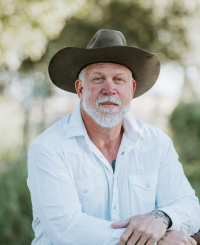
Brandon Guinn
Founder & CEO, Ranch House Recovery
Brandon Guinn founded Ranch House Recovery, a community-centered program for men recovering from addiction on a working ranch in Elgin, Texas. As a father whose family was touched by addiction, he built the program around daily structure, honest work, and lasting community.
Read Brandon’s full bio