
RHR Blog
Who Are You Without Addiction? Rebuilding Identity and Purpose in Recovery
One of the most disorienting aspects of early recovery is the identity vacuum it creates. Addiction, whatever else it takes, provides structure, a daily purpose of sorts, a community of fellow users, a reliable (if destructive) way of managing time and emotion. When that structure is removed, many men are left with a question they may not even be conscious of asking: Who am I now?
For men who began using substances in their teens or early twenties, this question can be particularly acute. If addiction was present during the years when identity is typically formed through work, relationships, values, and the accumulation of experience, the sober self may feel not just unfamiliar but genuinely unknown.
Rebuilding identity and purpose is not a sidebar to recovery at Ranch House. It is the main event. The Regenerative Recovery model is built around the conviction that lasting sobriety is only possible when a man has something worth being sober for, a self he recognizes and respects, and a life with enough meaning to make the daily practice of recovery feel worthwhile.
The Identity Wound at the Core of Addiction
Addiction and identity are deeply entangled. Most men who develop addiction are not simply people who happened to encounter a substance at the wrong time. They are, typically, people who were already struggling with questions of worth, belonging, and purpose who found in substances a way of managing those questions that worked, temporarily, and then stopped working, and then became the problem.
The shame that accumulates in addiction, the broken promises, the failed relationships, the evidence of one’s own worst behavior creates a story about the self that is very difficult to escape: I am someone who cannot be trusted. I am someone who hurts the people I love. I am someone who cannot stop. This story, believed deeply enough, becomes self-fulfilling. Recovery requires building a different story, not a false one, but a truer one.
How Ranch House Rebuilds Identity
Through work that produces pride
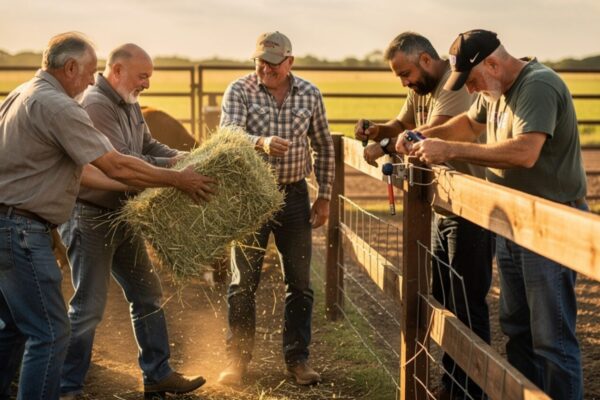
One of the most direct ways that identity shifts at Ranch House is through the experience of doing work that a man can be proud of. Farming, animal care, and community service are not therapeutic exercises. They are real work that produces real results. A man who tends a crop from seed to harvest, who helps train a rescued horse, who shows up every Saturday to serve his community, accumulates a different body of evidence about himself. Evidence that contradicts the story addiction told.
This is why the Regenerative Recovery model insists that the work of the ranch is not supplemental to treatment; it is treatment. The experience of capable, purposeful action is how a new identity is built, from the outside in, until it takes root.
Through the Twelve Steps
The Twelve Step process is, in part, an identity process. Working the Steps requires a man to take an honest inventory of who he has been, to make amends for the harm he caused, and to begin living by a different set of principles. Over time, this process constructs a new story, not one that erases the past, but one that integrates it. The Fourth Step inventory does not exist to condemn a man; it exists to allow him to see himself clearly, take responsibility for what was his, release what was not, and choose differently.
Living the Steps daily, as the Ranch House practices them, builds what might be called a recovery identity: a sense of oneself as someone who tells the truth, who makes amends when wrong, who serves others, who shows up. This identity is actively constructed through repeated practice, day after day on the ranch.
Through brotherhood and being known
Identity is partly a social construction; we know ourselves partly through how we are known by others. For men who have spent years hiding, performing, or being known primarily through their addiction, the experience of being genuinely known in a small, intimate community like Ranch House is profoundly identity-building.
When a peer mentor says ‘I see what you’re becoming,’ or when a fellow resident acknowledges your growth, or when a staff member who knew you on day one reflects who you are on day sixty, these moments are not just encouraging. They are constitutive. They help build the self that is learning to emerge.
Purpose: The Thing That Makes Sobriety Worth Having
Identity and purpose are connected but distinct. Identity is about who you are; purpose is about what you are here to do. Both are essential to lasting recovery, and both are addressed directly in the Regenerative Recovery model.
Purpose at Ranch House is cultivated through service. Not abstract service as a concept, but the actual, physical experience of showing up for animals who depend on you, for community members who benefit from your work, for fellow men in recovery who need your honesty and your story. Purpose is discovered in action, not in reflection, which is why Ranch House is structured around doing, not just understanding.
Many Ranch House graduates describe a moment often unexpected, often in the middle of seemingly ordinary farm work or community service, when they felt something they had not felt in years: that their presence mattered, that they were doing something that counted, that their life had a point. This is the experience of purpose. It does not arrive as an insight. It arrives as a feeling, grounded in action.
Identity After Ranch House
The work of identity and purpose does not end when a man leaves the ranch. It continues in the daily practice of recovery, in the relationships he maintains with the Ranch House community, in the way he shows up at work, at home, and in the world.
What Ranch House provides is a foundation: a set of experiences, relationships, and practices that have begun to build a different self. A self that has evidence of its own capability, a community that knows and expects its best, and a set of daily practices that sustain and deepen the transformation that began on the ranch.
If you are ready to find out who you are without addiction or to help a man you love begin that discovery, Ranch House Recovery is here. Call (512) 525-8175 or contact us.