Trauma, PTSD, and Addiction in Men: Understanding the Connection


A substantial portion of men who enter residential addiction treatment are carrying unresolved trauma. Some are aware of it. Many are not. The connection between traumatic experience and substance use is one of the most well-documented relationships in addiction medicine, and one of the most consistently undertreated.
This page covers how trauma drives addiction in men, why men rarely disclose trauma history in clinical settings, what PTSD and addiction look like together, and what treatment at Ranch House Recovery addresses.
How Trauma Drives Addiction
Trauma disrupts the brain’s stress response system in ways that make emotional regulation persistently difficult. The amygdala, which processes threat, becomes hyperactivated. The prefrontal cortex, which moderates emotional response and supports rational decision-making, becomes less effective. The hippocampus, which contextualizes memory, is impaired.
When the nervous system is chronically hyperactivated by unresolved traumatic experience, substances that provide relief from that activation become powerfully reinforcing. Alcohol suppresses the sympathetic nervous system. Opioids provide relief from emotional and physical pain simultaneously. These effects are real, and they explain why substances work so effectively, in the short term, for men with trauma histories.
Types of Trauma That Drive Addiction in Men
The traumatic experiences most commonly found in the histories of men seeking addiction treatment include:
- Childhood physical, emotional, or sexual abuse
- Combat exposure and military trauma
- Witnessing violence or the violent death of someone close
- Serious accidents or medical trauma
- Adult sexual assault, which affects men at rates rarely disclosed
- Cumulative developmental trauma from unstable or chaotic upbringing
The stigma associated with male victimization, particularly sexual abuse and assault, means that these histories are disclosed at far lower rates than they actually occur.
Why Men Rarely Disclose Trauma
Men report trauma histories at significantly lower rates than women in treatment settings, but this gap reflects disclosure patterns, not incidence. The cultural construction of male identity does not support the acknowledgment of vulnerability, fear, helplessness, or victimization.
A men-only residential environment with time, trust, and peer relationships can create the conditions where that disclosure becomes possible in ways that a co-ed or short-stay program cannot. The absence of women in the environment removes one layer of performance. The presence of other men who are engaging with their own histories creates permission.
PTSD and Addiction: Specific Considerations
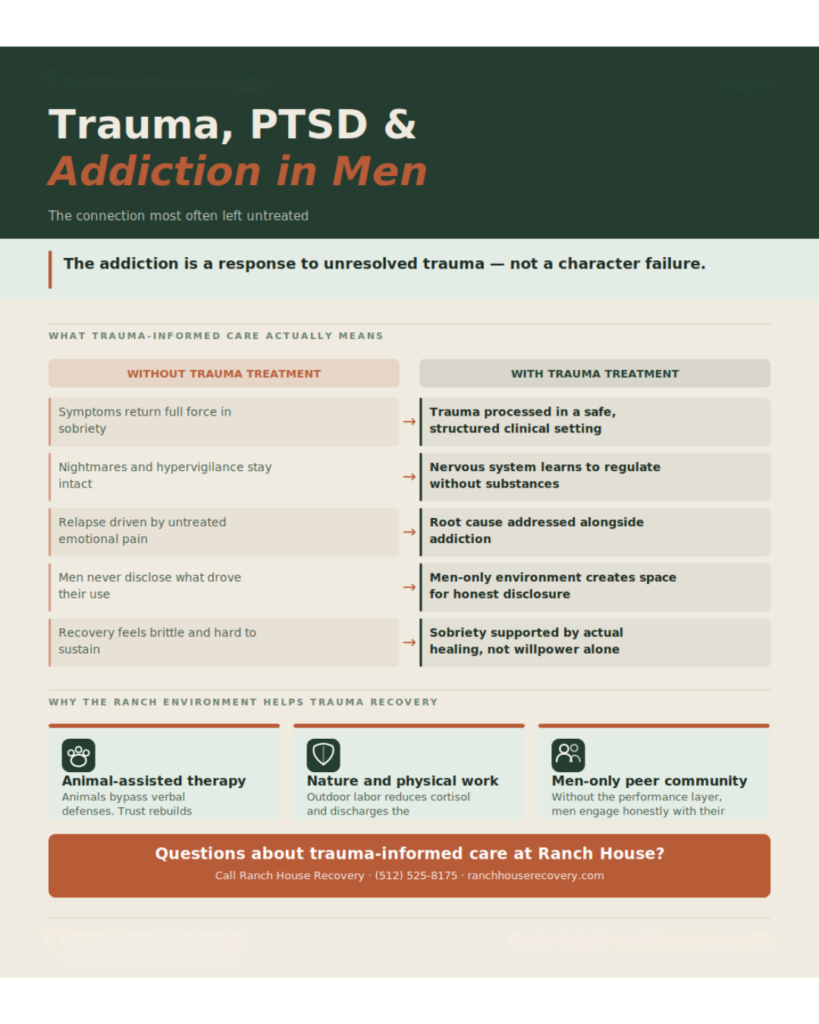
Post-traumatic stress disorder and substance use disorder are formally recognized as frequently co-occurring. The shared neurobiological mechanisms, hyperactivated stress response, dysregulated fear circuitry, and impaired emotional regulation, mean that each condition worsens the other.
Treating the addiction without addressing the PTSD leaves the most powerful driver of use intact. Men who get sober without trauma treatment frequently find that the symptoms that drove their drinking, nightmares, hypervigilance, emotional numbing, intrusive memories, return with full force in early recovery.
Ranch House Recovery’s clinical model includes access to therapists with trauma specialization. Learn more about our clinical programming.
The Ranch Environment and Trauma Recovery
There is meaningful evidence that natural environments, structured physical activity, and working with animals reduce hyperarousal and support nervous system regulation in people with trauma histories. Time in nature reduces cortisol and activates the parasympathetic nervous system. Physical work creates discharge for the physiological arousal that trauma keeps activated.
Animal-assisted therapy at Ranch House creates a relational context that bypasses some of the verbal and social defenses that male trauma survivors use to avoid vulnerability. Animals do not judge. They respond to consistency and care with trust that is immediate and legible. Residents often find that their capacity for connection begins to rebuild through their work with animals before it transfers to human relationships.
Learn more about our animal-assisted therapy program.
The Long Road of Trauma Recovery
Trauma recovery is not a linear process that completes within a residential stay. Residential treatment creates the safety, stabilization, and early processing required to begin that recovery. What follows, the integration of traumatic experience into a coherent life narrative, continues in outpatient therapy and ongoing community support.
Ranch House Recovery’s aftercare planning addresses the continuation of trauma-informed care after discharge. Referrals to trauma-specialized outpatient therapists are made before a resident leaves the program.
Located in Elgin, Texas.
Call Ranch House Recovery at (512) 525-8175.

About the Author
Brandon Guinn
Founder & CEO, Ranch House Recovery
Brandon Guinn founded Ranch House Recovery, a community-centered program for men recovering from addiction on a working ranch in Elgin, Texas. As a father whose family was touched by addiction, he built the program around daily structure, honest work, and lasting community.
Read Brandon’s full bio