Do 12-Step Programs Actually Work? What the Research Says


Few topics in addiction treatment generate more heat than the 12 steps. Defenders point to millions of people sober through Alcoholics Anonymous and its descendants. Critics call it unscientific, religious, outdated, or all three. Both sides argue mostly from anecdote, which is a strange way to settle a question that researchers have actually studied for decades.
So let’s look at what the research found. Not the marketing version and not the backlash version. The evidence is more interesting than either camp admits, and it has practical consequences for anyone choosing a treatment program in Texas right now.
The Short Answer
For alcohol use disorder, the best available evidence says yes, 12-step approaches work, and for one specific outcome they appear to work better than the alternatives.
In 2020, the Cochrane Collaboration, generally considered the most rigorous and least excitable reviewer of medical evidence in the world, published a systematic review of Alcoholics Anonymous and Twelve-Step Facilitation. It analyzed 27 studies covering over 10,000 participants. The headline finding surprised many people who expected Cochrane to deflate the AA mythology: clinically delivered programs designed to engage people with AA produced higher rates of continuous abstinence than cognitive behavioral therapy and other established treatments, and they did it at lower cost, largely because the community support continues for free after formal treatment ends.
That last clause is the part worth sitting with. Most therapies stop when the sessions stop. A 12-step community is still there at year two, year five, and year twenty, on a Tuesday night, in nearly every town in Texas, at no charge. The economics of that are unlike anything else in healthcare.
What the Critics Get Right
None of this makes the criticism worthless. Some of it lands, and an honest treatment program should be able to say so.
The spiritual language is a real barrier for some people. The steps were written in 1939 and it shows. “Higher power” reads differently to a 24-year-old agnostic than it did to the program’s founders, and pretending otherwise loses people who might have been helped. The reasonable response, which AA itself has increasingly embraced, is that the higher power concept is broader than any religion, and plenty of atheists work the steps by treating the group itself, or the process, as the thing larger than their own willpower. Some people still bounce off it. That is fine. The research case for 12-step engagement is about what happens on average, not a claim that it is the only road.
The “powerlessness” framing bothers people too, particularly clinicians trained in self-efficacy models. Step one asks a person to admit they cannot control their use, which critics read as disempowering. In practice, most people who arrive at treatment have already run the experiment of controlling it themselves, usually for years, and the admission functions less as surrender of agency and more as the end of an exhausting argument with reality. But the tension is real, and a good counselor handles it with nuance rather than slogans.
Finally, attendance alone is weak medicine. Sitting in the back of a meeting twice a month does little. The research effect comes from engagement: getting a sponsor, working the steps, building relationships, showing up consistently. This is precisely why the strongest results in the Cochrane review came from structured Twelve-Step Facilitation, where trained clinicians actively connect people to the program, rather than from a pamphlet and a meeting list.
Why Pairing the Steps with Residential Treatment Changes the Math
Here is the practical problem with telling someone in a crisis to “just go to meetings.” Early addiction recovery involves withdrawal, cravings, co-occurring depression or anxiety, wrecked sleep, and an environment full of triggers. A free community meeting, however good, is one hour in a day that contains 23 others. The National Institute on Drug Abuse has been blunt about this for years: effective treatment must address the whole person, and adequate time in treatment is critical.
This is the case for doing 12-step work inside a residential program rather than instead of one. In a structured 12-step recovery program in Texas, the steps are not an evening activity bolted onto an unchanged life. They are woven into the daily schedule alongside individual therapy, group work, and, in our case, the physical rhythm of a working ranch. A man works step four with a counselor who also knows what came up in Tuesday’s group and how he handled a conflict in the barn that morning. The meeting community is being built before discharge, so the handoff to lifelong free support is warm rather than cold.
The evidence on treatment duration points the same direction. NIDA’s research consistently finds that outcomes improve with longer engagement, and that stays shorter than 90 days show limited effectiveness for many people. We have written elsewhere about why 30 days usually isn’t enough; the short version is that the steps, like everything else in recovery, are a practice rather than an inoculation, and practices take time to become habits. A long-term residential treatment setting gives the steps enough runway to stop being assignments and start being how a person actually lives.
What Working the Steps Actually Does
Strip away the mid-century language and the steps are a fairly sophisticated piece of behavioral and relational engineering. The National Institute on Alcohol Abuse and Alcoholism has funded research into the mechanisms, and the findings are unglamorous in the best way: 12-step involvement works largely by changing a person’s social network, increasing abstinence self-efficacy, and providing structured ways to handle the wreckage that fuels relapse, namely guilt, resentment, and isolation.
Consider what the steps make a person do. Take a fearless written inventory of your own conduct. Say it out loud to another human being. Identify everyone you harmed and go make it right where possible. Build a daily practice of self-examination. Then give the whole thing away by helping the next man through it. Whatever you call the higher power, that sequence attacks shame, which is the engine of most addiction, with a directness that polite modern therapy sometimes circles for months.
It also explains the sponsor effect. A sponsor is a person who has done the thing you are trying to do, is available at 11 p.m. on a bad night, and has no financial relationship with your recovery. There is no clinical service that replicates that, which is why thoughtful programs treat sponsorship as infrastructure rather than competition.
The Honest Bottom Line
Do 12-step programs work? For alcohol use disorder, the highest-quality evidence says they perform at least as well as the best clinical therapies, and better on sustained abstinence, with the unique advantage of free lifetime availability through communities like AA, which publishes meeting directories for every region of Texas. For other substances the research base is thinner but the mechanisms appear to transfer. The steps work poorly as a slogan and well as a practice, they work better with a sponsor than without, and they work best when started inside a structured treatment environment that handles everything the meetings cannot.
That conclusion is roughly what our philosophy has been from the start, not because the research told us so but because the men who built this place got sober this way and then watched the studies catch up. If you want the unfiltered version, read what the men who have been through it say in their own words.
One caution: no approach, including this one, works for everyone, and anyone who tells you otherwise is selling something. SAMHSA’s treatment locator and helpline at 1-800-662-4357 can help you compare options. Ask any program you call how they actually integrate the steps, who facilitates that work, and what happens after discharge. If the answer is “we drive them to a meeting on Thursdays,” keep looking. The steps deserve better than that, and so does the person you are calling about.
How Programs Get 12-Step Integration Right, and Wrong
Since the research advantage comes from facilitated engagement rather than mere attendance, the practical question for families is what integration actually looks like inside a treatment program. There is a spectrum, and most marketing language hides where a given program sits on it.
At the weak end is the shuttle model: a van to an off-site meeting twice a week, checked off as “12-step exposure.” The client sits in the back row of a room full of strangers, returns to a program that never mentions the meeting again, and discharges with no sponsor, no home group, and no working relationship with the steps. This satisfies the brochure and accomplishes almost nothing, which is precisely what the engagement research predicts.
At the strong end, the steps are load-bearing. Step work is scheduled into the clinical week and reviewed with counselors who know the client’s history. Sponsorship is treated as a discharge requirement rather than a suggestion, so the relationship exists and has been tested before the man leaves. Meetings happen both on-site, where the community can be built safely, and off-site, where the client practices walking into a room of strangers sober, because that is the skill he will need at home. Staff include people who work programs themselves and can model what a recovered life looks like at five and fifteen years. Alumni return for meetings, which quietly proves the whole premise to every man in his first month.
The questions that locate a program on this spectrum take two minutes to ask. How many clients leave here with a sponsor, and how do you make that happen? Who reviews step work, and how often? Do alumni attend meetings on the property? What is the plan for my son’s first ninety days of meetings after discharge, in his actual home city? Programs at the strong end answer with logistics. Programs at the weak end answer with philosophy.
None of this requires a program to be exclusively 12-step, and good ones integrate the steps alongside clinical therapy rather than instead of it. What it requires is taking the mechanism seriously: the steps work through relationships and repetition, and both take deliberate construction. A program that leaves that construction to chance has outsourced the most durable part of treatment to a van schedule.
Frequently Asked Questions About 12-Step Programs
What is the success rate of 12-step programs? There is no single honest number, because success depends on engagement, not enrollment. The 2020 Cochrane review found that clinically delivered 12-step approaches produced higher rates of continuous abstinence than other established therapies for alcohol use disorder. But people who merely attend occasionally do far worse than people who get a sponsor and work the steps. Any program quoting you one tidy success percentage, for any method, is marketing rather than measuring.
Do I have to be religious to work the 12 steps? No. The steps use spiritual language, and that language is a genuine barrier for some people, but the higher power concept is explicitly broader than any religion. Plenty of agnostics and atheists work the steps by treating the group, the process, or simply something larger than their own willpower as the operative power. What the steps actually require is honesty, willingness, and action, none of which has a denomination.
What is Twelve-Step Facilitation? Twelve-Step Facilitation, or TSF, is a structured, clinician-delivered therapy designed to actively engage people with 12-step recovery: understanding the concepts, attending meetings, getting a sponsor, and working the steps. It is the version of 12-step involvement with the strongest research support, and it is the difference between handing someone a meeting list and actually building the bridge.
Do 12-step programs work for drugs other than alcohol? The strongest research base is for alcohol, but the model has spread to nearly every substance through Narcotics Anonymous and similar fellowships, and the mechanisms that drive it, network change, accountability, structured amends, and sponsorship, are not alcohol-specific. Clinically, 12-step work is routinely integrated into treatment for opioid, stimulant, and polysubstance addiction.
What if I tried AA before and it didn’t work? Ask what “tried” meant. For most people who bounced off, it meant attending some meetings during a crisis, without a sponsor, without working the steps, and often without any treatment underneath. That is like saying medication failed when the prescription was never filled. Trying again inside a residential program, with facilitation and a community already around you, is a different experiment with different odds.
Are 12-step meetings free? Yes. Meetings are free, everywhere, forever, supported by voluntary contributions. There are thousands of weekly meetings across Texas, in person and online, and no one will ever bill you. It remains the only lifetime aftercare program in existence with no cost of admission.
About the Author
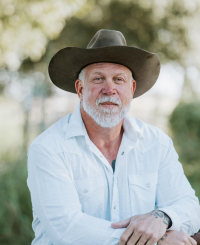
Brandon Guinn
Founder & CEO, Ranch House Recovery
Brandon Guinn founded Ranch House Recovery, a community-centered program for men recovering from addiction on a working ranch in Elgin, Texas. As a father whose family was touched by addiction, he built the program around daily structure, honest work, and lasting community.
Read Brandon’s full bio