
RHR Blog
How to Choose a Wellness Farm: Seven Questions Families Should Ask Before Committing
New to the idea? Start with the full guide to what a wellness farm is and how the model works, or see the wellness farm model at Ranch House Recovery.
The term wellness farm went from obscure to everywhere in about two years. National political figures floated farms as an answer to the opioid crisis, journalists wrote think pieces, and treatment marketers did what treatment marketers do: they noticed which way the wind was blowing and updated their websites.
The result is a confusing landscape for families. Some wellness farms are serious treatment programs where agriculture, animal care, and clinical therapy are integrated into one model that has quietly existed for decades. Others are conventional facilities that planted a vegetable bed and a keyword. The label tells you almost nothing. What you ask on the phone tells you almost everything.
We run a working recovery ranch outside Austin, so we are not neutral observers. But we would rather families ask hard questions of every program, including ours, than choose based on photography. Here are the seven questions that do the sorting, and what good and bad answers sound like.
First, a 60-Second Definition
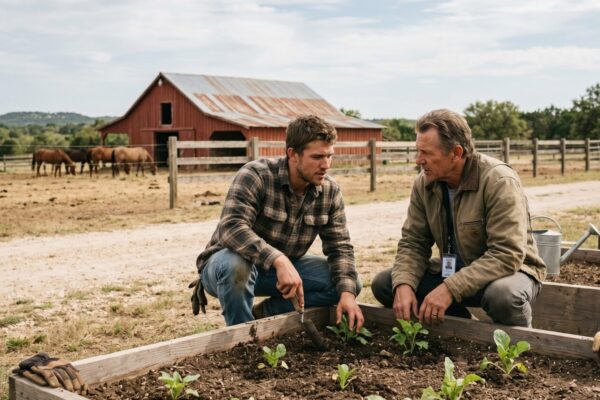
A real wellness farm in the recovery context is a residential treatment setting where the farm is part of the treatment. Clients participate in growing food, caring for animals, and maintaining the land, and that participation is structured, supervised, and clinically processed. The model rests on a simple observation that long predates the current hype: people in early recovery do better with routine, physical work, responsibility for living things, and a community organized around shared purpose. We have written a full explainer on the wellness farm model and where it came from if you want the deeper background.
What a wellness farm is not: a substitute for licensed clinical care. Soil does not treat severe substance use disorder. The farm is the container; therapy, counseling, peer recovery work, and medical oversight are the treatment. Any program that blurs that line in either direction, all clinic with a decorative garden or all garden with no clinic, should make you cautious.
Now the questions.
1. “Is the farm part of the schedule or part of the scenery?”
Ask for the actual weekly schedule. On a working program, farm responsibilities appear at specific times on specific days, the way group therapy does, because that is what they are: programming. If the answer is some version of “clients can enjoy the grounds,” you are looking at landscaping, not treatment. Real therapeutic farming is scheduled, assigned, and supervised, and clients are accountable for showing up to it exactly as they are for therapy.
2. “What licenses do you hold, and who are your clinicians?”
This is the question that protects you from the worst outcomes. In Texas, residential substance use treatment requires licensure through the Health and Human Services Commission, and any legitimate program will tell you its license status without hesitation. Cross-check on FindTreatment.gov, the federal directory maintained by SAMHSA. Then ask who actually delivers the clinical care: licensed chemical dependency counselors, licensed professional counselors, access to medical and psychiatric support. A farm with no clinical spine is a commune, and a person in early recovery needs more than a commune.
3. “How does the farm work connect to the therapy?”
This question separates programs that integrate from programs that co-locate. In an integrated model, what happens on the land becomes material for the clinical work. The client who blew up at a peer over a feeding schedule processes that in group. The one who discovered he could be trusted with the animals talks about what trust used to mean in his family. Staff communicate across the farm-clinic line. A good program answers this question with stories, instantly, because it happens every day. A weak program answers with adjectives.
4. “Who is this model wrong for?”
Honest programs have an answer. The farm model is genuinely not for everyone. People who need medical detox need that first, somewhere equipped for it. People with acute psychiatric instability need a higher level of care. Some people simply hate outdoor work, and while discomfort is often productive in treatment, a fundamental mismatch is not. The National Institute on Drug Abuse lists matching treatment settings to the individual among its core principles of effective care, and a program that claims to fit everyone is ignoring it. Beware of any admissions person whose answer to “is this right for my son” is an unconditional yes before they have asked you anything.
5. “What does a hard day look like?”
Marketing shows the sunrise. You want to hear about the August afternoon, the client who refused to leave his bunk, the week it rained. Programs that do this work for real have texture in their answers: weather contingencies, how staff handle resistance, what happens when an animal gets sick or dies and a client who has bonded with it has to face that. Grief, frustration, and boredom are not failures of the model; they are the model. Recovery is learning to feel difficult things without using. A farm generates difficult things on schedule. Listen for whether the program understands that or hides from it.
6. “What happens after discharge?”
The CDC and every serious researcher in this field will tell you that recovery is a long process, and rural and agricultural settings, whatever their advantages during treatment, are not where most clients will live afterward. A strong program builds the bridge: aftercare planning, alumni community, connection to 12-step or other peer support in the client’s home city, and a step-down plan rather than a cliff. Ask what percentage of alumni stay engaged with the program after leaving and how. If the relationship ends at the gate, the model is incomplete.
7. “What do you mean by holistic?”
Holistic is the most abused word in treatment marketing, and wellness farms attract it like flies. Sometimes it means something rigorous: treating the whole person, body, mind, relationships, and purpose, with the farm as one tool among several. Sometimes it means crystals and a juice menu. We have written about what holistic addiction treatment actually means when the word is used honestly, and the difference comes down to whether the holistic elements are additions to evidence-based clinical care or replacements for it. Additions can be powerful. Replacements get people hurt. Make every program define the word, then check whether the definition includes licensed therapy at meaningful frequency.
Reading the Answers
You will notice that none of these questions is hostile. They are the questions any program doing the work for real loves to answer, because the answers are its actual life. The programs that get defensive, vague, or salesy under this kind of questioning have told you something more useful than any brochure.
A few additional signals worth weighing. Programs that name their staff publicly tend to be programs proud of their staff. Programs that talk about outcomes honestly, including the limits of what they can promise, tend to be programs that track them. And programs whose model existed before the wellness farm headlines, the working ranches and recovery farms that were doing this when it was unfashionable, tend to be running a philosophy rather than a trend. The model behind holistic addiction treatment in Texas ranch settings was not invented by a press cycle, and the programs worth your trust can tell you their own history in detail.
The Bottom Line
The wellness farm moment is, on balance, good news. It has families asking whether treatment can be something other than a locked unit with a courtyard, and the honest answer is yes, it can, and for many men it works better. We see it every day on our own land, where the Regenerative Recovery model has been our whole identity since the beginning, not a rebrand.
But a label is not a model. Ask the seven questions. Check the licenses. Demand the schedule. The real programs will pass easily, and the person you love deserves the real thing.
What a Week on a Wellness Farm Actually Looks Like
Abstractions are easy to market, so here is the concrete version, drawn from how working programs, including ours, structure the days. Use it as a baseline when you ask other programs for their schedule.
Mornings start early and start outside. Animals eat before people do, which means feeding rounds, water checks, and stall or pen work happen first, in assigned crews, before breakfast. This is not symbolic. The early responsibility is the spine of the day, and the fact that it happens regardless of weather, mood, or last night’s group session is most of the lesson. After breakfast comes the clinical block: individual therapy sessions on a rotating schedule, group therapy, psychoeducation, or step work, the same licensed care any quality residential program delivers indoors.
Afternoons return to the land in structured work periods: garden beds, fencing, equipment maintenance, seasonal projects. Crews are supervised, tasks are assigned to ability, and the work is real, meaning the program actually depends on it getting done. Men rotate through responsibilities over the weeks, so the newcomer learning to be trusted with a watering schedule in month one may be leading a crew by month three, and that progression is itself a treatment plan written in chores. Late afternoons typically hold physical training, recreation, or quiet time, and evenings belong to recovery community: 12-step meetings, peer process groups, or family calls on designated nights.
Weekends loosen without dissolving. Animal care never pauses, because it cannot, but the clinical schedule lightens in favor of longer projects, visits, and rest. Seasons change the texture: spring planting, summer heat management, fall harvest, winter repairs. Men who arrive in different months have genuinely different programs, which is part of the model’s honesty. Life does not repeat a curriculum, and neither does a farm.
When you ask a prospective program to walk you through this and the answer lacks this texture, no crew assignments, no rotation, no seasonality, no explanation of what happens when someone refuses the morning feed, you are hearing a schedule that exists on paper. The real ones sound like a place where people live, because that is what they are.
Frequently Asked Questions About Wellness Farms
What is a wellness farm for addiction recovery? A wellness farm is a residential recovery setting where agriculture and animal care are structured parts of treatment, not amenities. Clients participate in growing food, tending animals, and maintaining land on a fixed schedule, alongside licensed clinical care including individual and group therapy. The model uses routine, physical work, and responsibility for living things to rebuild capacities that addiction erodes.
Are wellness farms licensed in Texas? The farm is not licensed; the treatment is. Any wellness farm providing substance use treatment in Texas must hold a chemical dependency treatment facility license from the Health and Human Services Commission, exactly like any other rehab. A wellness farm with no license is offering housing and chores, not treatment, whatever its website says. Always verify in the HHSC lookup before committing.
How is a wellness farm different from a ranch rehab? Mostly vocabulary and emphasis. Both describe residential treatment on working land. Programs emphasizing livestock and ranch operations tend to use ranch language; programs emphasizing cultivation and food tend to say wellness farm; many, including ours, are both, which is why we describe our approach as Regenerative Recovery rather than leaning on either label. The questions in this article apply identically to either label, because the label is the least informative thing about any program.
Does insurance cover wellness farm treatment? Frequently yes, because insurers cover licensed residential treatment regardless of setting. The farm elements are part of the program rather than separately billed services. Verification of benefits, network status, and authorized length of stay all work the same as at any residential facility, so get specifics in writing.
How long do people stay at a wellness farm? Typically 60 to 120 days or longer. The model rewards time: seasons turn, animals come to know you, responsibilities grow, and the research on treatment duration points the same direction, with stays beyond 90 days associated with more durable recovery. A wellness farm selling two-week resets is selling the scenery without the mechanism.
Are wellness farms only for certain addictions? No. The model treats the standard range of substance use disorders, alcohol, opioids, stimulants, and polysubstance use, provided medical detox, when needed, happens first in an appropriate setting. The better question is fit by person rather than by substance: the model favors people who can engage in physical work and benefit from high structure.
About the Author
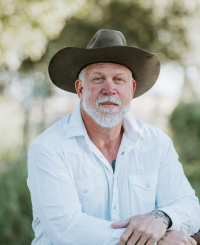
Brandon Guinn
Founder & CEO, Ranch House Recovery
Brandon Guinn founded Ranch House Recovery, a community-centered program for men recovering from addiction on a working ranch in Elgin, Texas. As a father whose family was touched by addiction, he built the program around daily structure, honest work, and lasting community.
Read Brandon’s full bio