
RHR Blog
The Role of Community Service in Building Lasting Recovery

Community service supports lasting recovery because helping others rebuilds the connection, purpose, and sense of identity that addiction strips away, and research consistently links service and volunteering with lower relapse risk. Addiction narrows a person’s world down to the self and the substance. Service does the opposite. It pulls a man back out into the world, gives him a role beyond patient or addict, and reminds him that he has something to offer. For many men in recovery, that shift is not a nice extra. It is part of what makes the change hold.
This article looks at why service matters clinically, what the research actually shows, the forms service takes in recovery, how it works as long-term relapse prevention, and where it fits at Ranch House Recovery. If you or someone you love is in crisis right now, call SAMHSA’s National Helpline at 1-800-662-HELP (4357). It is free, confidential, and runs 24 hours a day.
Quick answer Service work is one of the more reliable protective factors in long-term recovery. Helping others rebuilds purpose, accountability, and identity, and research on mutual-aid recovery links helping behavior with lower relapse rates. It is not a substitute for clinical treatment, but layered on top of it, service is one of the strongest ways to make recovery durable.
Why service supports recovery
Addiction shrinks the world. It narrows focus to the self and the substance, usually at the expense of family, friendships, and community. Service reverses that narrowing, and it does so through several specific mechanisms.
Reconnection
Helping others reminds a man that he is part of something larger than himself. Active addiction is profoundly isolating, and isolation feeds relapse. Showing up for other people rebuilds the social ties that protect recovery.
Accountability
A commitment to a service group or a standing volunteer role creates responsibility that reaches beyond the treatment setting. Other people are counting on him to be there, which is a very different motivation from doing recovery for himself alone.
A shift in identity
This may be the most powerful mechanism of all. Instead of seeing himself as an addict or a patient, a man in service begins to experience himself as a helper, a contributor, someone others rely on. Recovery requires building a self that is not organized around using, and service gives that new self something concrete to be organized around.
Purpose and meaning
Recovery is not only the removal of a substance. It is the construction of a life with enough purpose and connection that the escape a substance once offered is no longer as appealing. Service is one of the most direct routes to that sense of meaning.
Reduced stigma
Visible service challenges the stereotypes people hold about addiction. When a man in recovery is seen contributing to his community, it humanizes recovery for everyone watching, and it changes how he sees himself in the process.
What the research actually shows
The idea that helping others helps the helper has a name in the research literature: the helper therapy principle. In recovery specifically, studies of helping behavior within mutual-aid groups such as Alcoholics Anonymous have found that members who take on service roles and help others tend to have lower relapse rates than those who do not. The effect is consistent enough that clinicians treat service as a genuine protective factor rather than a feel-good extra. Federal resources like the National Institute on Drug Abuse emphasize that durable recovery depends on comprehensive support, connection, and a rebuilt life, which is exactly what structured service helps provide.
None of this means service is a cure on its own. It means that, as one component of a complete recovery plan, service consistently earns its place.
How service rebuilds recovery capital
Researchers use the term recovery capital to describe the resources a person can draw on to get and stay well: the strength of their social connections, the personal skills and confidence they carry, and the ties that root them in a community. Active addiction depletes all three. Service rebuilds them directly. Volunteering widens a man’s social network with people who are not connected to using. Taking on real responsibility restores the sense of competence and follow-through that addiction erodes. And contributing to a community earns him a genuine place in it, a form of belonging he can lean on when recovery gets hard. Seen this way, service is not charity work bolted onto treatment. It is one of the most efficient ways to rebuild the exact resources that predict long-term recovery.
How service is built into the Twelve Steps
For programs grounded in the Twelve Steps, service is not an afterthought. The twelfth step is explicitly about carrying the message to others and being of service, on the understanding that helping another person in recovery strengthens your own. Long before the research caught up, recovery communities had already discovered that the surest way to keep what you have is to give it away.
What service looks like in recovery
Service in recovery is broad, and the specific task matters less than the consistency and the genuine contribution. Common forms include:
- Volunteering at food banks, shelters, or community events.
- Mentoring and sponsorship, supporting people who are earlier in their recovery than you are.
- Working the land, such as helping at a community farm, which combines physical work, contribution, and time outdoors.
- Everyday reliability, showing up as a dependable presence for family, neighbors, and coworkers.
Service at Ranch House Recovery
Every week, residents step off the ranch and into Elgin to serve. Sometimes that means supporting local food banks, sometimes helping at the neighboring Simple Promise Farms, and sometimes lending a hand at community events. Service is not treated as an optional add-on. It is woven into the foundation of the program alongside licensed clinical care and recovery work.
Founder Brandon Guinn puts the philosophy simply:
Addiction is isolating. Service is connecting. The best way to heal is to get outside of yourself and help someone else.
How service changes the way men see themselves
We have watched men who once avoided all responsibility come alive in service. One resident described volunteering at a local community event and being thanked by people who knew nothing about his past. They simply saw him helping, and that changed how he saw himself. These moments are not abstract. They are lived experiences that build confidence, purpose, and belonging, and they tend to stick.
Service as long-term relapse prevention
Recovery does not end at the ranch. When men graduate, many carry their service forward through mentoring, volunteering, or simply being a reliable and caring presence in their communities. That ongoing engagement is one of the most practical ways to sustain recovery over the long term, because it keeps a man connected, accountable, and rooted in a purpose beyond himself. Our program is designed to build that habit early so it can outlast the structured phase of treatment.
How families can encourage service without forcing it
Families often want to help but are not sure how. The most useful posture is encouragement without pressure. Pointing out a volunteer opportunity, offering to come along, or simply noticing and appreciating a man’s contributions reinforces the new identity he is building. What tends to backfire is turning service into another demand, or a test he can fail. The goal is for contribution to feel like something he gets to do, a source of pride, rather than one more obligation placed on him. Small, genuine acknowledgment usually does more than any push.
A necessary caution: service supports treatment, it does not replace it
As powerful as service is, it is not a substitute for professional care. Detox, therapy, and medical oversight address the physical and psychological core of addiction, and service works best layered on top of that foundation rather than in place of it. This is why serious programs build service into treatment instead of offering it instead of treatment. If you are researching options, the men’s residential program page and our philosophy page explain how the clinical and the experiential fit together.
Frequently asked questions
Does volunteering actually reduce relapse risk?
Research on recovery consistently links helping others with better outcomes. Studies of helping behavior within mutual-aid groups such as Alcoholics Anonymous have found that members who help others tend to have lower relapse rates, an effect often called the helper therapy principle. Service is not a cure on its own, but as part of a broader recovery plan it is one of the more reliable protective factors.
When in recovery is the right time to start service work?
Usually after some initial stability rather than in the first days of withdrawal. Early recovery focuses on stabilization and clinical work. Once a person has a foundation, structured service, whether volunteering, mentoring, or helping around a community, becomes a powerful way to build purpose and connection. In a residential program, staff help time it appropriately.
Is this the same as court-ordered community service?
No. Court-ordered community service is a legal penalty. Service in recovery is voluntary and therapeutic, chosen because helping others rebuilds identity, accountability, and belonging. The activities can look similar, but the purpose and the effect are different.
What kinds of service help most in recovery?
The most helpful service tends to be regular, hands-on, and done alongside others: volunteering at food banks, helping at community events, mentoring newer people in recovery, or working the land at a community farm. What matters is consistency and genuine contribution, not the specific task.
Can community service replace professional addiction treatment?
No. Service supports recovery, but it does not replace clinical care. Detox, therapy, and medical oversight address the physical and psychological core of addiction. Service works best layered on top of that foundation, which is why programs build it into treatment rather than offering it instead of treatment.
Does Ranch House Recovery include community service?
Yes. Community service is built into the program at Ranch House Recovery, a men’s-only residential program near Austin in Elgin, Texas. Residents volunteer in the local community each week as part of their recovery. The program is private-pay and does not accept insurance, and the admissions team is glad to explain how it all works.
The bottom line
Service reminds us that we are not defined by what broke us, but by what we give back. When a man steps into service, he steps into a new identity, one built on contribution, integrity, and his role in strengthening the people around him. That transformation does not only benefit the individual. It radiates outward into stronger families, healthier neighborhoods, and more resilient communities. For anyone searching for meaningful, community-rooted recovery, an approach that blends clinical care with real-world purpose gives men the tools to build lives of dignity, service, and hope.
Talk with our admissions team
If you want a recovery program that treats service and purpose as part of the work, not a side activity, Ranch House Recovery is here to help. We are a men’s residential program near Austin, Texas, and we will give you a straight, judgment-free read on whether we are the right fit. Call (512) 525-8175 or visit our admissions page to start the conversation. You can also read more about addiction treatment in Austin, TX.
About the Author
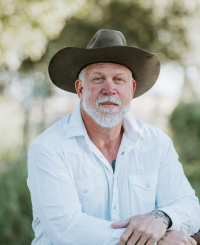
Brandon Guinn
Founder & CEO, Ranch House Recovery
Brandon Guinn founded Ranch House Recovery, a community-centered program for men recovering from addiction on a working ranch in Elgin, Texas. As a father whose family was touched by addiction, he built the program around daily structure, honest work, and lasting community.
Read Brandon’s full bio