
RHR Blog
When Love Isn’t Enough: Empowering Families to Take Action in Addiction Recovery

When love alone is not enough to reach someone with addiction, families still have real, effective options: setting clear boundaries, learning evidence-based ways to encourage treatment, and getting professional support for the whole family, not just the person using. Watching someone you love struggle with addiction is one of the hardest things a family can go through. It is natural to believe that enough patience, love, and support will eventually be enough. Often it is not, because addiction is a medical condition that changes the brain, not a problem that willpower or affection can resolve on its own. That truth is painful, but it is also freeing. It means the next step is not to love harder. It is to act differently.
This guide is for families searching for what to actually do: how to tell helping from enabling, how to set boundaries that protect everyone, what the research says about encouraging a reluctant loved one into treatment, and how to care for yourselves along the way. If your loved one is in immediate danger, call 911. For free, confidential guidance any time, call SAMHSA’s National Helpline at 1-800-662-HELP (4357).
Quick answer You cannot force an adult to recover, but you are far from powerless. Families change outcomes by shifting from rescuing to boundary-setting, by using evidence-based methods like CRAFT to make treatment the more attractive path, and by getting their own support. When the family system changes, the person using often does too.
Why love alone often isn’t enough
Love is powerful, but addiction distorts the relationships it touches. As the National Institute on Drug Abuse explains, repeated substance use changes the brain’s circuits for reward, motivation, and self-control, which is why a person can genuinely want to stop and still keep using. Understanding this is not about excusing behavior. It is about aiming your effort where it can actually work, at getting professional help engaged, rather than at trying to love someone out of a medical condition.
Signs that love alone isn’t working
- Promises to stop are made sincerely and then repeatedly broken.
- You notice dishonesty, secrecy, or manipulation you did not see before.
- Consequences are escalating: job loss, legal trouble, or health scares.
- Your own mental and physical health is deteriorating under the stress.
None of these mean you have failed. They mean the situation has outgrown what any family can manage alone, and professional support needs to enter the picture.
The difference between helping and enabling
Almost every enabling behavior begins as an act of love. The distinction is simple to state and hard to live: helping supports recovery, while enabling protects a person from the consequences of use and lets it continue. Paying bills so a loved one’s own money is freed up for substances, calling in sick on their behalf, or rushing in to fix every crisis can all keep the cycle turning. A useful question in any given moment is whether your action makes the next use easier or harder. That single question cuts through most of the confusion.
Setting boundaries that protect everyone
Boundaries are not punishment, and they are not abandonment. They are limits that protect your wellbeing and stop underwriting the addiction, while keeping the door to real help wide open. They tend to feel uncomfortable at first, especially for families used to rescuing, but they are often what finally shifts the dynamic.
Examples of healthy boundaries include:
- Declining to give money that could fund substance use, while offering to pay directly for treatment.
- No longer covering up legal, work, or financial consequences.
- Making continued support conditional on steps toward treatment.
- Protecting your own time, sleep, and mental health rather than organizing everything around the crisis.
Boundaries work through consistency. A limit that is set and then abandoned under pressure teaches that pressure works. A limit held with calm and love, over time, changes the equation.
Encouraging treatment: what the evidence actually supports
For decades, the cultural image of getting a loved one into treatment has been the surprise confrontation, the whole family in a room delivering an ultimatum. That approach, often called the Johnson model, can work, but research has shown it is less effective and higher-risk than many people assume, and a large share of planned confrontational interventions never even happen. The evidence increasingly favors collaborative, non-confrontational methods.
CRAFT: the evidence-based family approach
CRAFT stands for Community Reinforcement and Family Training. It teaches family members how to use positive communication, how to reinforce healthy non-using behavior, how to allow natural consequences, and how to look after their own wellbeing. Rather than working against the relationship, it works through it. Studies of CRAFT have found it engages treatment-resistant loved ones into care at substantially higher rates than traditional confrontational interventions or family support groups alone, while also reducing the family’s own stress and depression. For most families, it is the most effective starting point.
Professional interventions
A trained interventionist can still be valuable, especially in complex or high-risk situations, and the best ones today use collaborative, invitational methods rather than ambush-style confrontation. A good professional meets with the family first, helps set boundaries and consequences, coordinates unified communication, and arranges immediate access to treatment if the person accepts. Ranch House Recovery collaborates with trusted intervention professionals so that families have support and a clear next step ready the moment their loved one says yes.
What to say, and what to avoid
How you talk matters as much as what you decide. A few principles help:
- Speak from care, not accusation. “I love you and I’m scared” lands very differently than “you always” or “you never.”
- Be specific and calm. Name what you have seen without lecturing or diagnosing.
- Offer a concrete next step, not just concern. Have a treatment option and phone number ready.
- Avoid arguing during intoxication. Wait for a sober, calmer moment.
Taking care of yourself and the family
Families often pour everything into a loved one and neglect themselves, which helps no one. Your wellbeing is not a luxury here, it is part of the strategy, because a steady, supported family is far more able to hold boundaries and encourage change. Support groups such as Al-Anon, family therapy, and your own counseling all help. So does remembering that you did not cause the addiction, you cannot control it, and you cannot cure it, though you can influence the environment around it.
When it is an emergency
Some situations cannot wait for a plan. Call 911 immediately if you see signs of an overdose, such as unresponsiveness, slow or stopped breathing, blue-tinged lips or fingertips, or pinpoint pupils with opioids. If opioids may be involved, naloxone can reverse an overdose and is available at most pharmacies without a prescription in Texas. Keeping it on hand is a reasonable precaution for any family living with opioid use. When in doubt, treat it as an emergency.
After they say yes: the family’s role during treatment
Getting a loved one into treatment is a milestone, not the finish line, and families sometimes lose momentum the moment relief sets in. The weeks that follow are when family work matters most. Expect to be invited into education sessions and, in many programs, family therapy, both of which help rebuild the communication addiction eroded. Manage your own hope carefully. Early progress is real but fragile, and setbacks are part of many recovery stories rather than proof of failure. Keep the boundaries you set, stay involved without taking over, and let the clinical team do the clinical work. Your steady, consistent presence, more than any single conversation, is what supports a lasting recovery.
How Ranch House Recovery supports families
Addiction affects the whole family, so recovery has to include the family too. Ranch House Recovery is a men’s residential program on a working ranch near Austin, in Elgin, Texas, and family engagement is built into the program. That includes education about addiction, regular family communication during treatment, and guidance on boundaries and relapse prevention for after a man comes home. Detox is coordinated through trusted partner facilities before residential care begins, and the men’s program and our philosophy page explain how the clinical and community pieces fit together. Whether you are preparing for a conversation or figuring out the step after an intervention, you do not have to work it out alone.
Frequently asked questions
Can I force an adult loved one into treatment?
In most cases, no. Adults generally cannot be compelled into treatment outside of narrow legal processes, and care entered under pure coercion tends to start at a disadvantage. What families can do is powerful: set clear boundaries, stop the supports that make continued use easier, and use evidence-based approaches like CRAFT to make treatment the more attractive choice. Many people who once refused help enter treatment when their family changes how it responds.
What is the difference between helping and enabling?
Helping supports recovery. Enabling, usually with the best intentions, protects a person from the consequences of their use and allows it to continue. Paying for essentials so someone can spend their own money on substances, covering for missed work, or repeatedly rescuing them from crises are common forms of enabling. The line is whether your action makes the next use easier or harder.
Do interventions actually work?
They can, but the approach matters. The dramatic, confrontational surprise intervention is less effective than many people assume, and many never happen at all. Research increasingly favors collaborative, non-confrontational methods, especially CRAFT, which engage reluctant loved ones into treatment at substantially higher rates while improving the family’s own wellbeing. A trained professional can help you choose and plan the right approach.
What is CRAFT?
CRAFT stands for Community Reinforcement and Family Training. It is an evidence-based method that teaches families how to use positive communication, reinforcement of healthy behavior, and their own self-care to guide a loved one toward treatment. Unlike confrontational interventions, it works with the relationship rather than against it, and studies have found it more effective at engaging treatment-resistant people.
How do I set boundaries without giving up on my loved one?
Boundaries are not punishment or abandonment. They are limits that protect you and stop supporting the addiction while keeping the door to help open. For example, you might decline to give money that could fund use while making clear you will help them get into treatment the moment they are ready. Consistency is what makes boundaries work.
Can Ranch House Recovery help before my loved one agrees to treatment?
Yes. Ranch House Recovery works with families and trusted intervention professionals before a loved one has agreed to care, helping you plan, set boundaries, and prepare next steps. It is a men’s-only residential program near Austin in Elgin, Texas, and it is private-pay. The admissions team is glad to talk through your situation with no pressure.
The bottom line
When love is not enough, action can be. You cannot force someone to recover, but you can change what you allow, how you communicate, and where you point your energy, and those changes matter more than most families realize. Set boundaries with love, learn the approaches that actually move reluctant people toward help, and get support for yourself along the way. Recovery is possible, and you do not have to lead the way there alone.
Talk with our admissions team
If your family is trying to help a man who is struggling, Ranch House Recovery is here to help you think it through, whether or not he is ready yet. We will give you a straight, judgment-free read on the options and the next step. Call (512) 525-8175 or visit our admissions page to start the conversation.
About the Author
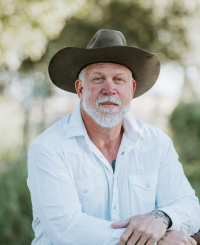
Brandon Guinn
Founder & CEO, Ranch House Recovery
Brandon Guinn founded Ranch House Recovery, a community-centered program for men recovering from addiction on a working ranch in Elgin, Texas. As a father whose family was touched by addiction, he built the program around daily structure, honest work, and lasting community.
Read Brandon’s full bio