
RHR Blog
Fentanyl and Opioid Detox in Texas: What to Expect Before Residential Treatment

Common questions
What makes fentanyl withdrawal different from other opioids?
Fentanyl is lipophilic, meaning it stores in fatty tissue and releases over a longer, less predictable period than shorter-acting opioids. This can delay the onset of withdrawal and extend its duration. Protracted symptoms including persistent cravings, mood instability, and sleep disruption are more common with fentanyl than with heroin or prescription opioids.
What is post-acute withdrawal syndrome (PAWS)?
Post-acute withdrawal syndrome (PAWS) is a cluster of symptoms that persist after acute detox resolves. In opioid recovery, PAWS typically involves mood instability, sleep disruption, cognitive fog, difficulty concentrating, and persistent low-level cravings. Symptoms can fluctuate unpredictably for 6 to 18 months after the last use and are a significant driver of post-treatment relapse.
Is medication-assisted treatment (MAT) used during opioid detox?
Yes. Buprenorphine and methadone are evidence-based components of opioid detox that significantly reduce withdrawal severity and improve detox completion rates. Buprenorphine is typically initiated when moderate withdrawal symptoms begin. Clonidine may also be used to manage autonomic symptoms such as elevated blood pressure and sweating.
How long does opioid detox take?
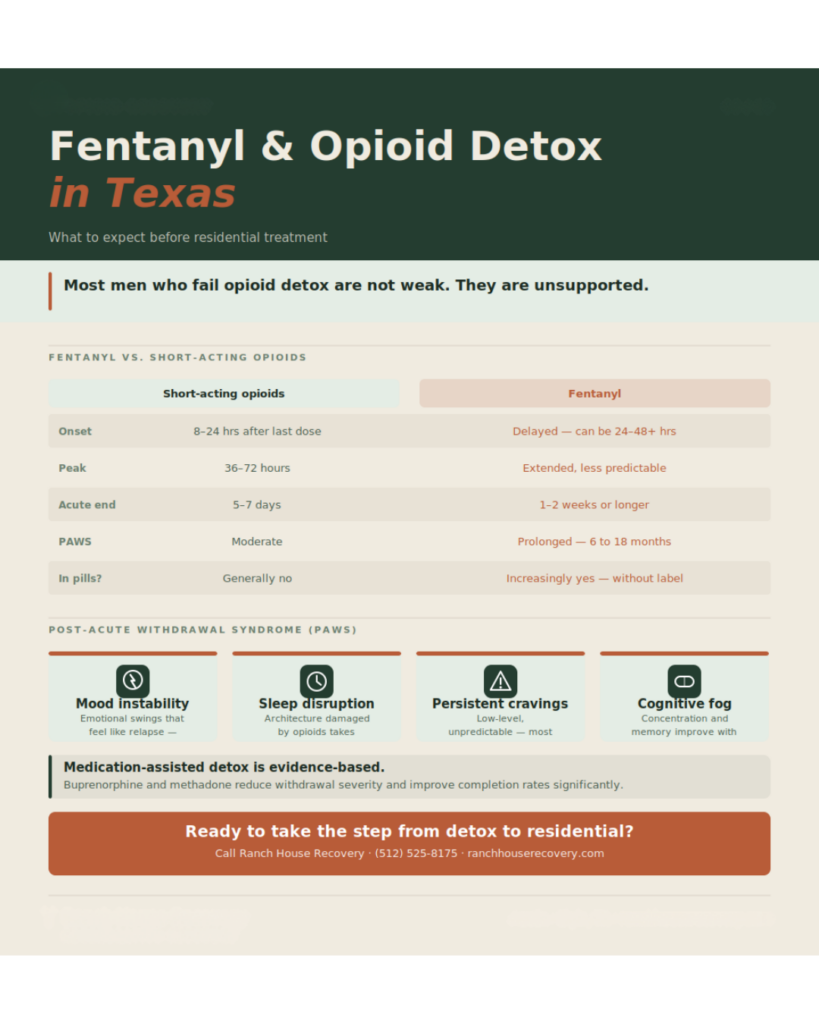
For short-acting opioids such as heroin, oxycodone, and hydrocodone, withdrawal begins within 8 to 24 hours and peaks at 36 to 72 hours. Acute symptoms typically resolve within 5 to 7 days. For fentanyl, withdrawal may be delayed and acute symptoms can persist for 1 to 2 weeks. Post-acute withdrawal symptoms can continue for months.
Fentanyl has changed the opioid crisis in ways that older frameworks did not anticipate. Its potency and the severity of physical dependence it creates have made opioid withdrawal more complex and the path to residential treatment more medically demanding.
This page covers what opioid withdrawal actually involves, what to expect during fentanyl detox specifically, and how the transition to residential care at Ranch House Recovery works.
What Opioid Withdrawal Feels Like
Opioid withdrawal is rarely life-threatening, but it is one of the most acutely miserable physical experiences in medicine. The combination of flu-like symptoms, severe gastrointestinal distress, insomnia, muscle cramping, extreme anxiety, and profound psychological distress creates the conditions where most unsupported attempts at withdrawal fail. That failure is not a character flaw. It is a predictable response to a severe physiological process without adequate support.
Fentanyl-Specific Considerations
Fentanyl’s lipophilic nature means it stores in fatty tissue and can release over a longer and less predictable period than shorter-acting opioids. Withdrawal may be delayed in onset and more prolonged. Protracted symptoms, including persistent cravings, mood instability, and sleep disruption, are more common with fentanyl than with heroin or prescription opioids.
Fentanyl is also increasingly found in counterfeit pills and mixed with other substances without the user’s knowledge, meaning many men seeking treatment for stimulant or benzodiazepine use also have an undisclosed opioid component that emerges during withdrawal. A thorough clinical assessment at detox intake should screen for all substances.
Opioid Withdrawal Timeline
Short-Acting Opioids (heroin, oxycodone, hydrocodone)
Withdrawal begins within 8 to 24 hours of the last dose and peaks at 36 to 72 hours. Acute symptoms typically resolve within 5 to 7 days. The worst of the physical symptoms cluster in the first 72 hours.
Fentanyl and Long-Acting Opioids
Withdrawal may be delayed and prolonged. Acute symptoms can persist for 1 to 2 weeks. Post-acute withdrawal syndrome (PAWS) symptoms including sleep disruption, anxiety, and cravings can last for months after acute detox completes.
Medication-Assisted Treatment During Detox
Medications including buprenorphine and methadone can significantly reduce withdrawal severity and are considered evidence-based components of opioid detox. These medications improve detox completion rates and support the stability needed to engage in residential treatment.
Buprenorphine is typically initiated when the patient begins to experience moderate withdrawal symptoms. It reduces cravings and physical discomfort and can be continued into the residential phase and beyond as part of a medication-assisted treatment (MAT) approach.
Clonidine is used in some detox settings to manage the autonomic symptoms of opioid withdrawal, including elevated blood pressure, sweating, and anxiety, without the reinforcing properties of opioid-based medications.
What PAWS Means for Recovery Planning
Post-acute withdrawal syndrome is a cluster of symptoms that persist after acute detox resolves. In opioid recovery, PAWS typically involves mood instability, sleep disruption, cognitive fog, difficulty concentrating, and persistent low-level cravings. Symptoms can fluctuate unpredictably for 6 to 18 months after the last use.
Understanding PAWS is important because it explains why many men feel reasonably stable in the first weeks after residential discharge and then experience a sharp increase in symptoms and craving intensity. This is a neurological process, not a failure of willpower, and it underscores the value of a robust aftercare plan.
The Path from Detox to Ranch House Recovery
Ranch House Recovery does not provide on-site medical detox. Residents complete detox through trusted partner facilities and are admitted to the residential program in Elgin, Texas following medical clearance.
The 60-day and 90-day programs at Ranch House are designed to address the behavioral, relational, and spiritual dimensions of opioid addiction that detox alone does not reach.
Review our program lengths and structure.
Family Communication During Opioid Detox
Family members often feel urgency to communicate with their loved one during detox. Communication is typically limited in a supervised detox setting to protect the focus required during a physically difficult process. This is appropriate.
The most useful thing a family can do during the detox period is participate in the intake conversation with the residential program, understand the timeline, and have everything in place for admission as soon as medical clearance is granted.
If you are ready to take the step, call us.
Call Ranch House Recovery at (512) 525-8175.

About the Author
Brandon Guinn
Founder & CEO, Ranch House Recovery
Brandon Guinn founded Ranch House Recovery, a community-centered program for men recovering from addiction on a working ranch in Elgin, Texas. As a father whose family was touched by addiction, he built the program around daily structure, honest work, and lasting community.
Read Brandon’s full bio