Using FMLA and Short-Term Disability to Go to Rehab in Texas

In recent years, innovative approaches to addiction treatment have gained popularity as more people seek healing beyond traditional clinical settings. One such approach is the addiction treatment wellness farm, a unique model that combines nature, holistic practices, and a supportive community to foster lasting recovery. In this article, we’ll explore the concept of a wellness farm, discuss what makes a ranch rehab stand out, and delve into the benefits of holistic addiction treatment.

How to Pay for Residential Rehab When You Don’t Have Insurance

In recent years, innovative approaches to addiction treatment have gained popularity as more people seek healing beyond traditional clinical settings. One such approach is the addiction treatment wellness farm, a unique model that combines nature, holistic practices, and a supportive community to foster lasting recovery. In this article, we’ll explore the concept of a wellness farm, discuss what makes a ranch rehab stand out, and delve into the benefits of holistic addiction treatment.

Fentanyl and Opioid Detox in Texas: What to Expect Before Residential Treatment

In recent years, innovative approaches to addiction treatment have gained popularity as more people seek healing beyond traditional clinical settings. One such approach is the addiction treatment wellness farm, a unique model that combines nature, holistic practices, and a supportive community to foster lasting recovery. In this article, we’ll explore the concept of a wellness farm, discuss what makes a ranch rehab stand out, and delve into the benefits of holistic addiction treatment.

Who Are You Without Addiction? Rebuilding Identity and Purpose in Recovery

One of the most disorienting aspects of early recovery is the identity vacuum it creates. Addiction, whatever else it takes, provides structure, a daily purpose of sorts, a community of fellow users, a reliable (if destructive) way of managing time and emotion. When that structure is removed, many men are left with a question they may not even be conscious of asking: Who am I now?

For men who began using substances in their teens or early twenties, this question can be particularly acute. If addiction was present during the years when identity is typically formed through work, relationships, values, and the accumulation of experience, the sober self may feel not just unfamiliar but genuinely unknown.

Rebuilding identity and purpose is not a sidebar to recovery at Ranch House. It is the main event. The Regenerative Recovery model is built around the conviction that lasting sobriety is only possible when a man has something worth being sober for, a self he recognizes and respects, and a life with enough meaning to make the daily practice of recovery feel worthwhile.

The Identity Wound at the Core of Addiction

Addiction and identity are deeply entangled. Most men who develop addiction are not simply people who happened to encounter a substance at the wrong time. They are, typically, people who were already struggling with questions of worth, belonging, and purpose who found in substances a way of managing those questions that worked, temporarily, and then stopped working, and then became the problem.

The shame that accumulates in addiction, the broken promises, the failed relationships, the evidence of one’s own worst behavior creates a story about the self that is very difficult to escape: I am someone who cannot be trusted. I am someone who hurts the people I love. I am someone who cannot stop. This story, believed deeply enough, becomes self-fulfilling. Recovery requires building a different story, not a false one, but a truer one.

How Ranch House Rebuilds Identity

Through work that produces pride

One of the most direct ways that identity shifts at Ranch House is through the experience of doing work that a man can be proud of. Farming, animal care, and community service are not therapeutic exercises. They are real work that produces real results. A man who tends a crop from seed to harvest, who helps train a rescued horse, who shows up every Saturday to serve his community, accumulates a different body of evidence about himself. Evidence that contradicts the story addiction told.

This is why the Regenerative Recovery model insists that the work of the ranch is not supplemental to treatment; it is treatment. The experience of capable, purposeful action is how a new identity is built, from the outside in, until it takes root.

Through the Twelve Steps

The Twelve Step process is, in part, an identity process. Working the Steps requires a man to take an honest inventory of who he has been, to make amends for the harm he caused, and to begin living by a different set of principles. Over time, this process constructs a new story, not one that erases the past, but one that integrates it. The Fourth Step inventory does not exist to condemn a man; it exists to allow him to see himself clearly, take responsibility for what was his, release what was not, and choose differently.

Living the Steps daily, as the Ranch House practices them, builds what might be called a recovery identity: a sense of oneself as someone who tells the truth, who makes amends when wrong, who serves others, who shows up. This identity is actively constructed through repeated practice, day after day on the ranch.

Through brotherhood and being known

Identity is partly a social construction; we know ourselves partly through how we are known by others. For men who have spent years hiding, performing, or being known primarily through their addiction, the experience of being genuinely known in a small, intimate community like Ranch House is profoundly identity-building.

When a peer mentor says ‘I see what you’re becoming,’ or when a fellow resident acknowledges your growth, or when a staff member who knew you on day one reflects who you are on day sixty, these moments are not just encouraging. They are constitutive. They help build the self that is learning to emerge.

Purpose: The Thing That Makes Sobriety Worth Having

Identity and purpose are connected but distinct. Identity is about who you are; purpose is about what you are here to do. Both are essential to lasting recovery, and both are addressed directly in the Regenerative Recovery model.

Purpose at Ranch House is cultivated through service. Not abstract service as a concept, but the actual, physical experience of showing up for animals who depend on you, for community members who benefit from your work, for fellow men in recovery who need your honesty and your story. Purpose is discovered in action, not in reflection, which is why Ranch House is structured around doing, not just understanding.

Many Ranch House graduates describe a moment often unexpected, often in the middle of seemingly ordinary farm work or community service, when they felt something they had not felt in years: that their presence mattered, that they were doing something that counted, that their life had a point. This is the experience of purpose. It does not arrive as an insight. It arrives as a feeling, grounded in action.

Identity After Ranch House

The work of identity and purpose does not end when a man leaves the ranch. It continues in the daily practice of recovery, in the relationships he maintains with the Ranch House community, in the way he shows up at work, at home, and in the world.

What Ranch House provides is a foundation: a set of experiences, relationships, and practices that have begun to build a different self. A self that has evidence of its own capability, a community that knows and expects its best, and a set of daily practices that sustain and deepen the transformation that began on the ranch.

If you are ready to find out who you are without addiction or to help a man you love begin that discovery, Ranch House Recovery is here. Call (512) 525-8175 or contact us.
The Brotherhood Factor: Why Community Is the Most Powerful Force in Men’s Recovery

Ask a man who has genuinely recovered from addiction what made the difference, and most of the time the answer is not a therapy technique, a medication, or a particular book. It is people. A sponsor who answered the phone at midnight. A peer in recovery who said ‘me too’ at exactly the right moment. A community that expected better from him and believed he was capable of it even when he did not believe it himself.

This is not sentiment. It is science. Research on addiction recovery consistently identifies social connection and community support as among the most powerful predictors of long-term sobriety. Loneliness and isolation, conversely, are among the most reliable predictors of relapse. The community you are embedded in, the relationships that hold you, challenge you, and know your name, may matter more than any individual element of formal treatment.

At Ranch House Recovery, this understanding is not just acknowledged, it is architected into the program from the ground up.

The Opposite of Addiction Is Connection

Ranch House founder Brandon Guinn is fond of quoting an insight from addiction science that has resonated widely in recovery communities: ‘The opposite of addiction is not sobriety, it is connection.’ This idea, rooted in the work of psychologist Bruce Alexander and popularized more broadly, captures something essential about why people use substances in the first place.

Substances fill a void. For many men, that void is relational, a lack of genuine intimacy, belonging, and being known. When a man can drink or use alone in a room and feel temporarily full, it is often because he has no other reliable source of the connection that human beings are wired to need. Treatment that removes the substance without addressing the void leaves a man vulnerable. Treatment that helps him build a real connection gives him something to be sober for.

How Ranch House Builds Brotherhood

Living together, working together

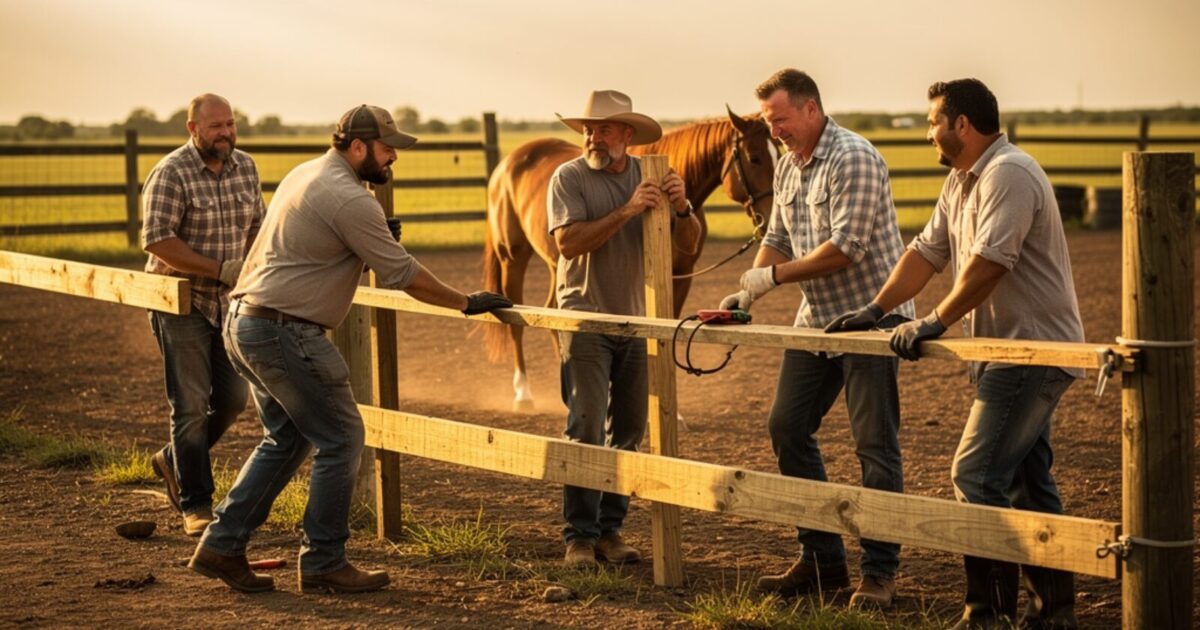
The most fundamental community-building element at Ranch House is simply this: men live together. They share space, meals, morning routines, farm work, and evening meetings. They are present to each other’s good days and bad days, their small victories and difficult moments. There is no way to live in close quarters with other people for thirty, sixty, or ninety days without knowing them and being known.

This is qualitatively different from attending group therapy sessions several times a week in an outpatient setting. Shared daily life creates the kind of intimacy that makes honest conversation possible, that gives accountability its teeth, and that allows men to witness each other’s transformation in real time.

Small community, deep relationships

Ranch House maintains an intentionally small number of beds. This is a deliberate choice that reflects a core conviction: recovery happens in relationship, and relationship requires specificity. In a program of eight or ten men, everyone knows everyone. Staff know every resident by name, history, and current struggle. Residents know each other’s patterns, support each other’s breakthroughs, and notice when someone is pulling back.

This intimacy would not be possible in a larger facility. The smallness is a feature, not a limitation.

Peer mentorship

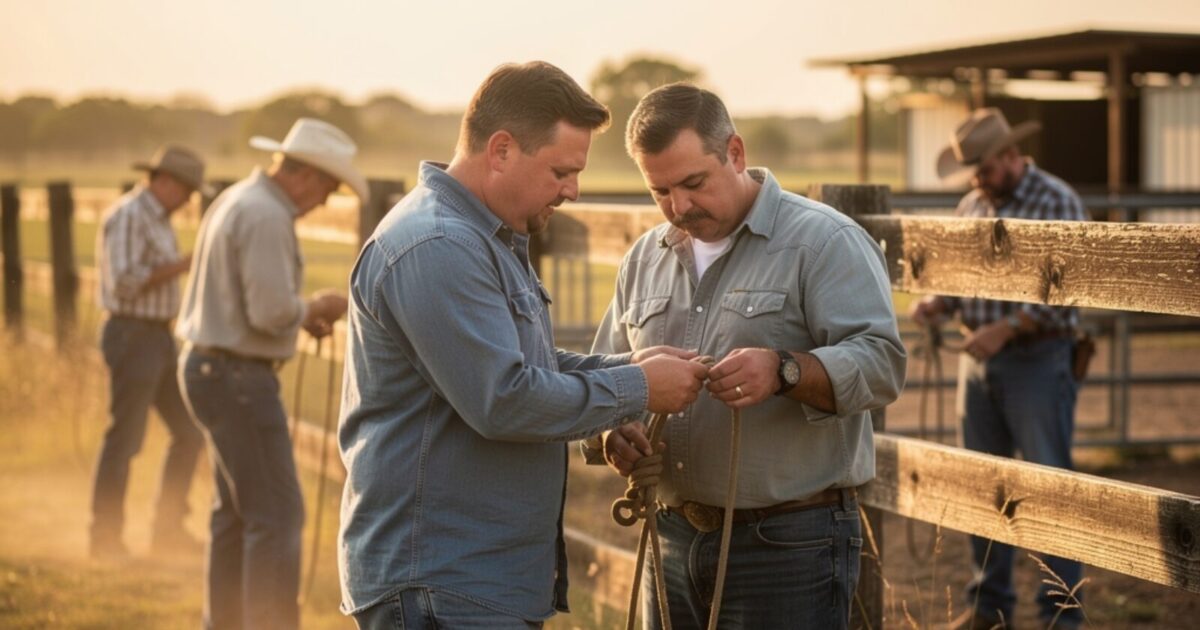
Each resident at Ranch House is paired with a peer mentor, a man further along in his own recovery who has walked a similar path. The mentor relationship is distinct from the therapeutic relationship with a counselor or psychiatrist: it is a relationship between peers, grounded in shared experience rather than professional expertise.

The mentor can say things that a therapist cannot: ‘I was exactly where you are. Here is what I did. Here is what did not work. Here is what I wish someone had told me.’ This transmission of experience from one man to another is the ancient heart of recovery, what AA has practiced for nearly ninety years, formalized at Ranch House into a structured program that ensures every resident has this kind of guide.

Service Work Saturday

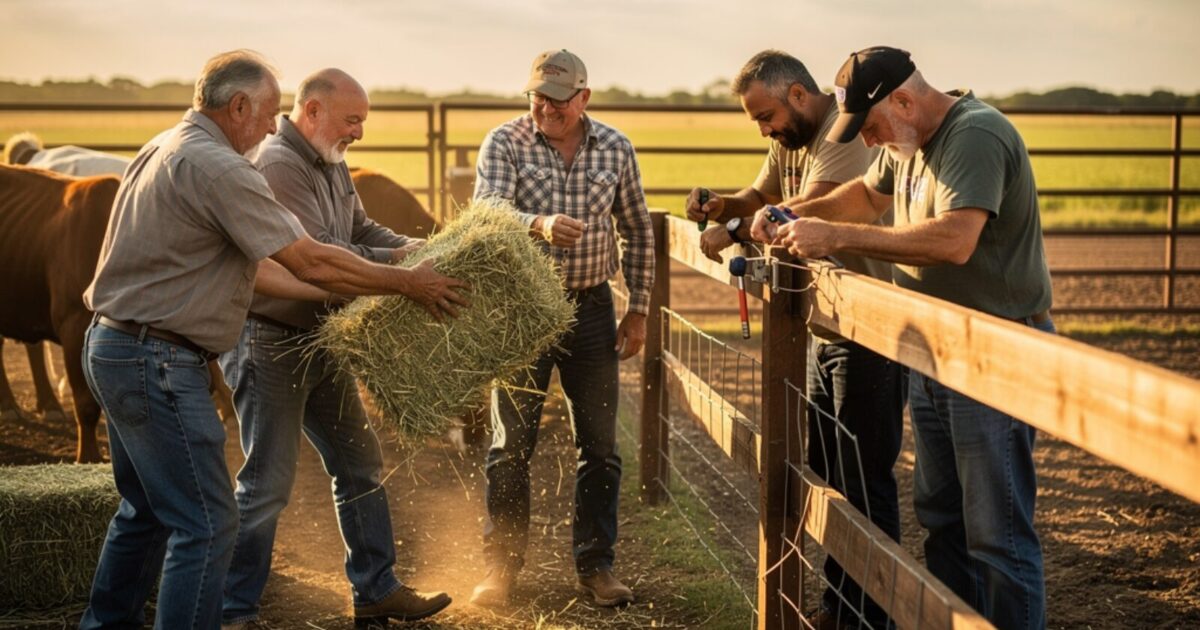
Every Saturday, Ranch House residents go into the Elgin community to do service, helping local families with yard work, assisting nonprofits, and supporting parks and recreation department projects. This weekly practice of service extends the community of recovery outward, connecting men at Ranch House to their neighbors and the broader world.

Service work builds community in two directions simultaneously: inward (shared experience and shared purpose among the men doing it) and outward (relationships with and responsibility toward the broader community). It also addresses one of the most corrosive effects of addiction: the experience of being a taker, a burden, someone who consumes without contributing. Service reverses that experience directly.

The Culture of Honesty

Community is only as powerful as the honesty it contains. A group of men performing recovery, saying the right things, maintaining the right appearances, is not a community in any meaningful sense. It is a room full of people pretending together, which ultimately reinforces the very skills addiction has already overdeveloped.

Ranch House works hard to create a culture in which honesty is expected, modeled, and safe. Staff members who are themselves in recovery model this by speaking openly about their own journeys. The Twelve Step framework provides a structure and language for honest self-examination. The daily intimacy of communal life makes performance increasingly difficult and authenticity increasingly accessible.

The men who graduate from Ranch House consistently describe this culture of honesty as one of the most significant gifts of their time there, the experience of being genuinely known and accepted, for the first time, without the armor of performance.

What Men Carry With Them

When a man leaves Ranch House Recovery, he does not leave the community behind. The relationships formed on the ranch with fellow residents, with mentors, with staff, are often among the most durable friendships of a man’s life. Men who have spent sixty or ninety days living, working, struggling, and growing together carry those bonds with them.

Many Ranch House graduates stay in close contact with each other. Some become mentors themselves, returning to the program to walk alongside the next generation of men. The community extends through time, becoming something the founders of AA understood intuitively: recovery is not a solo project. It is a collective one.

A Place to Belong

Ranch House Recovery was built to be a place where men belong not conditionally, not based on performance, not contingent on never struggling. A place where the whole person is welcome: the history, the wounds, the capacity for growth, the slow, nonlinear, profoundly human process of becoming someone who can live fully and honestly.

If you are looking for that kind of community for yourself or for a man you love, we are here. Call (512) 525-8175 or contact us.
The Addiction Crisis in Austin and Central Texas: What’s Happening and Where Ranch House Fits In

Austin is many things: a thriving technology hub, a celebrated music scene, and one of the fastest-growing cities in the country. It is also a city and a region, grappling with a substance use crisis that does not make the travel guides. The opioid epidemic, the ongoing toll of alcohol use disorder, and the rise of fentanyl-laced substances that have made drug use dramatically more dangerous are realities being lived by families across Travis County, Williamson County, Bastrop County, and throughout Central Texas.

Understanding the local landscape of addiction, what is driving it, who it is affecting, and what resources exist is important context for families navigating this crisis. Ranch House Recovery, located in Elgin, just 30 miles east of Austin, exists specifically to serve this community.

The Scale of the Problem in Texas

Texas consistently ranks among the states with significant substance use challenges. According to data from the Texas Health and Human Services Commission, hundreds of thousands of Texans meet the criteria for a substance use disorder in any given year. Opioid overdose deaths in Texas rose sharply during the COVID-19 pandemic and have been elevated since, driven significantly by the proliferation of illicitly manufactured fentanyl, a synthetic opioid so potent that a lethal dose is measured in micrograms.

Alcohol use disorder affects even larger numbers. It is the most widespread and in many ways most underrecognized form of addiction in Texas, partly because alcohol is legal, culturally normalized, and deeply embedded in social life. The harms it causes to health, to families, to careers, to communities are enormous but often invisible until they reach a crisis stage.

The Treatment Gap in Central Texas

One of the most significant challenges in the Central Texas addiction landscape is the treatment gap: the difference between the number of people who need treatment and the number who actually receive it. Nationally, research suggests that fewer than 10 percent of people who need addiction treatment receive it. In Texas, which has not expanded Medicaid and which has historically underinvested in behavioral health, the gap may be even larger.

The reasons people do not access treatment are well-documented: cost, stigma, lack of awareness of what treatment options exist, fear of losing a job or other life circumstances, and, perhaps most fundamentally, the reluctance to admit that help is needed, which is particularly acute among men.

Wait lists for state-funded programs can be long. The quality of treatment available varies considerably. And many of the programs that do exist are not designed to address the full complexity of what drives addiction in the first place, the trauma, the disconnection, the absence of purpose, in ways that produce lasting change.

What Makes the Austin Area Unique

Austin’s rapid growth has brought significant economic opportunity but also significant stress. Housing costs have risen dramatically. The city’s culture has changed faster than many longtime residents have been able to adapt. Young men, in particular those in their twenties and thirties who moved to Austin for opportunity or grew up here as the city transformed around them, are navigating a social landscape that can feel simultaneously full of possibility and deeply alienating.

The technology sector that employs many Austin residents has its own particular culture of high performance, long hours, and social drinking that can accelerate the development of problematic substance use. The pressures of hustle culture, the expectation of constant productivity, and the normalization of substances as performance enhancers or stress relievers create conditions in which addiction can develop in men who might not recognize themselves as ‘the kind of person’ who needs treatment.

The Rural-Urban Divide in Treatment Access

One of Ranch House Recovery’s distinctive advantages is its location: on a working ranch in Elgin, Bastrop County, thirty miles east of Austin. This location is therapeutic in itself, rural, quiet, and removed from the environments where most residents’ addiction took hold. But it also means that Ranch House serves not only Austin residents but men from across Central Texas, including communities in Bastrop, Lee, Caldwell, Gonzales, and surrounding counties where treatment access is even more limited than in the city.

For men in these rural communities, the options for residential treatment have historically been distant or nonexistent. Ranch House fills a genuine gap in the regional landscape providing high-quality, intensive residential treatment within a reasonable distance of home for families who need to stay connected.

Ranch House’s Role in the Regional Recovery Ecosystem

Ranch House Recovery is not a comprehensive healthcare system; it is one program, offering residential treatment for men, grounded in the Regenerative Recovery model. But it plays a specific and important role in the Central Texas recovery ecosystem.

By offering 30-, 60-, and 90-day residential programs in a holistic, community-based environment, Ranch House serves men who need more than a brief stabilization but who also benefit from staying close to their families and communities in Texas. By operating on a cash-pay model and offering scholarship assistance on a case-by-case basis, Ranch House makes its program accessible to some men who would otherwise struggle with cost. And by engaging in community service, attending local events, and participating in the public conversation about addiction, Ranch House actively works to reduce the stigma that keeps men from seeking help.

Every Saturday service project. Every farmers’ market where Ranch House residents sell produce grown on the ranch. Every KXAN segment, every community conversation, these are all part of Ranch House’s commitment to changing the face of addiction recovery in Central Texas.

If You Are in Central Texas and Need Help

If you or a man you love is struggling with addiction in the Austin area or anywhere in Central Texas, Ranch House Recovery is here. Located at 263 Roemer Road in Elgin, Texas, we are a short drive from Austin and accessible to communities throughout the region. Our admissions team can walk you through the program, discuss costs and scholarship availability, and help you determine whether Ranch House is the right fit.

Call us at (512) 525-8175 or contact us. Recovery is possible, and it can begin close to home.
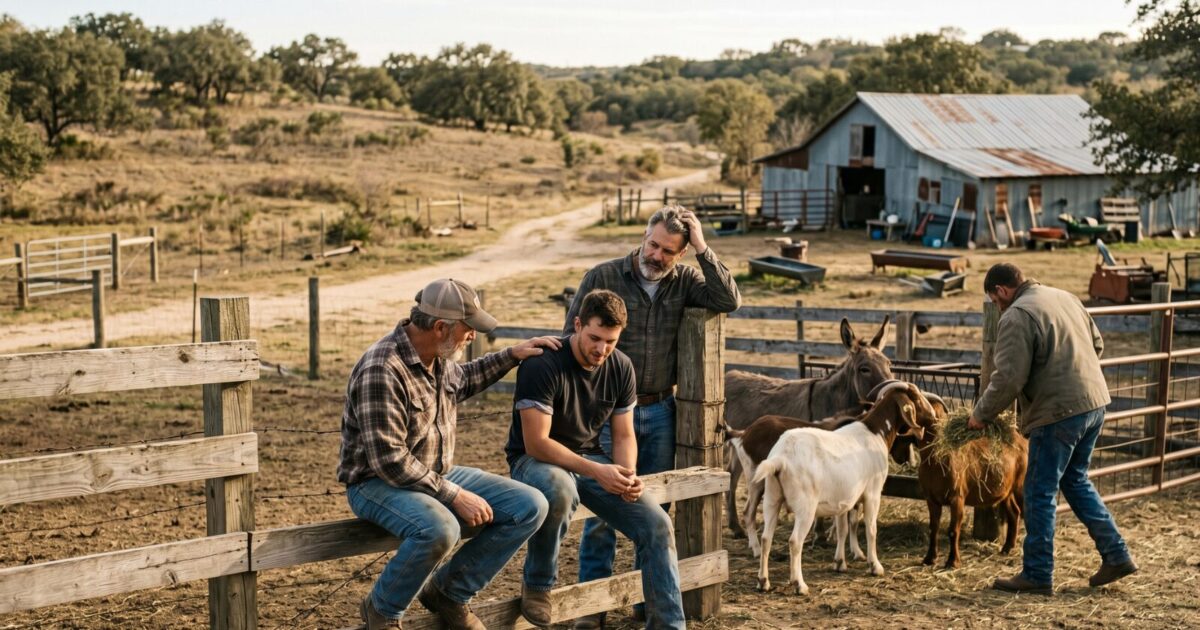
30, 60, or 90 Days: How Long Does Recovery Actually Take, and Why It Matters

One of the first questions families ask when considering residential treatment is: how long does this take? It is a practical question with real logistical implications, work, finances, family responsibilities, and the simple disruption of a life put on hold. But it is also a question that reveals a deeper assumption: that recovery has a defined endpoint, after which a man is ‘fixed’ and can return to normal life.

Ranch House Recovery offers 30-, 60-, and 90-day residential programs. Each of these is a genuine option, and the right choice varies depending on the individual. But understanding why longer time in treatment produces better outcomes and what actually happens in each phase helps families and men in recovery make a more informed decision about their investment in this process.

What the Research Shows About Treatment Duration

The research on treatment duration is consistent and compelling. Studies from the National Institute on Drug Abuse and other major research bodies have found that treatment episodes of less than 90 days produce significantly lower rates of lasting recovery than longer stays. The brain, after prolonged substance use, requires time to heal to restore normal dopamine function, to rebuild the neural pathways associated with impulse control and decision-making, and to establish new habits of thought and behavior that are stable enough to persist in the real world.

The standard 28- to 30-day program became the norm in the United States largely for insurance billing reasons, not clinical ones. It represents the minimum time required for acute stabilization getting someone through the worst of early withdrawal, introducing the concepts of recovery, and establishing a safety net. For some people with less severe addiction histories and strong support structures, it is enough. For many others, it is not. The relapse rates following 30-day programs, while not higher than untreated addiction, remain significant not because the programs failed, but because 30 days is often simply not long enough for real transformation.

What Happens in Each Phase

The first 30 days: Stabilization

The first month of residential treatment is dominated by the physical and neurological process of recovery. The brain is healing from the effects of prolonged substance use. Sleep is often disrupted. Emotions that were numbed by substances begin to surface, sometimes with unexpected intensity. Cravings are typically at their strongest in the early weeks.

In this phase, the primary work is stabilization getting through the acute discomfort of early recovery, establishing the basics of a daily routine, beginning to engage with therapy and the Twelve Steps, and starting to understand what drove the addiction in the first place. At Ranch House, the farm and animal care work play a particularly important role in this phase: they provide structure, purpose, and grounding when internal states are most chaotic.

A man who completes 30 days at Ranch House leaves with a foundation. He has been through acute stabilization, has begun the Twelve Step work, has experienced the community and the farm, and has a clearer sense of what recovery requires. For some men, this is enough to return home with a strong aftercare plan. For others, it is just the beginning.

Days 30 to 60: Engagement and Insight

The second month of treatment is often where the real work begins. The acute neurological storm of early recovery has settled. Sleep is typically improving. Emotions, while still raw, are becoming more manageable. The brain’s prefrontal cortex, the region responsible for planning, impulse control, and perspective, is beginning to heal enough to engage in more sustained reflection.

This is the phase in which men typically make progress on the deeper work: understanding the patterns of thought and behavior that drove their addiction, working through the Twelve Steps with more depth and honesty, and beginning to process difficult experiences from the past. The relationships within the Ranch House community deepen. Men who were strangers at day one are now brothers.

The 60-day mark is also when the impulse to leave often peaks. A man feels well enough to believe he has it handled. The acute misery of early recovery is behind him. Life back home starts to look appealing again. This is one of the most dangerous moments in recovery, not because the man has failed, but because the neurological and psychological healing is still incomplete. Leaving at this point, before the new patterns of thought and behavior have become stable, significantly increases relapse risk.

Days 60 to 90: Integration and Identity

The third month is where transformation consolidates into identity. A man who has been doing this work for two months begins to experience himself differently, not just as someone who used substances, but as someone who farms, serves, meditates, has brothers, and tells the truth. The new self begins to feel like a self.

This identity consolidation is crucial. Recovery requires not just the cessation of substance use but the construction of a life in which substance use is no longer attractive, a life with enough purpose, connection, and meaning that the escape substances offer is not as appealing. At 90 days, most men at Ranch House have that life. They know who they are becoming. They have relationships that matter to them. They have a daily practice of the Twelve Steps, the farm, and the spiritual practices that ground them.

Research consistently shows that 90-day treatment completers have significantly better long-term outcomes than 30-day completers. The additional time is not excessiv it is the difference between a seedling with shallow roots and one that has had time to grow deep.

The Founder’s Perspective

Brandon Guinn, Ranch House’s founder, has spoken directly about why he built a program that offers 60 and 90-day options. After watching his son cycle through multiple 30-day programs without lasting results, he concluded that the standard model was simply not giving men enough time to change. ‘We kept sending him to 30-day programs, and he’d come back worse,’ Guinn told KXAN. ‘So I started asking myself, what if we just created something different?’

That something different is a program designed not for the minimum time required to stabilise someone, but for the time actually required to transform them.

Making the Decision

The right length of stay at Ranch House depends on several factors: the severity and duration of the addiction, the presence of co-occurring mental health challenges, the strength of the support system at home, and the individual’s readiness to do the deep work. Our admissions team discusses these factors carefully with every prospective resident and family.

If finances are a concern for many families, they are it is worth understanding that the cost of a longer stay in residential treatment is typically far less than the ongoing cost of active addiction: lost employment, legal consequences, healthcare, and the emotional and relational toll that is hardest to quantify.

Ready to Start?

Whether you are considering 30, 60, or 90 days, the most important step is the first one. Ranch House Recovery is here to help you figure out what is right for your situation. Call us at (512) 525-8175 or to speak with our admissions team.

Why Men Struggle to Ask for Help with Addiction And What Changes When They Do

And What Changes When They Do

Addiction shrinks the world. 

It pushes out everything that used to matter until all that’s left is the substance and the shame it trails behind it. And for most men, the shame of asking for help feels bigger than the shame of the addiction itself. 

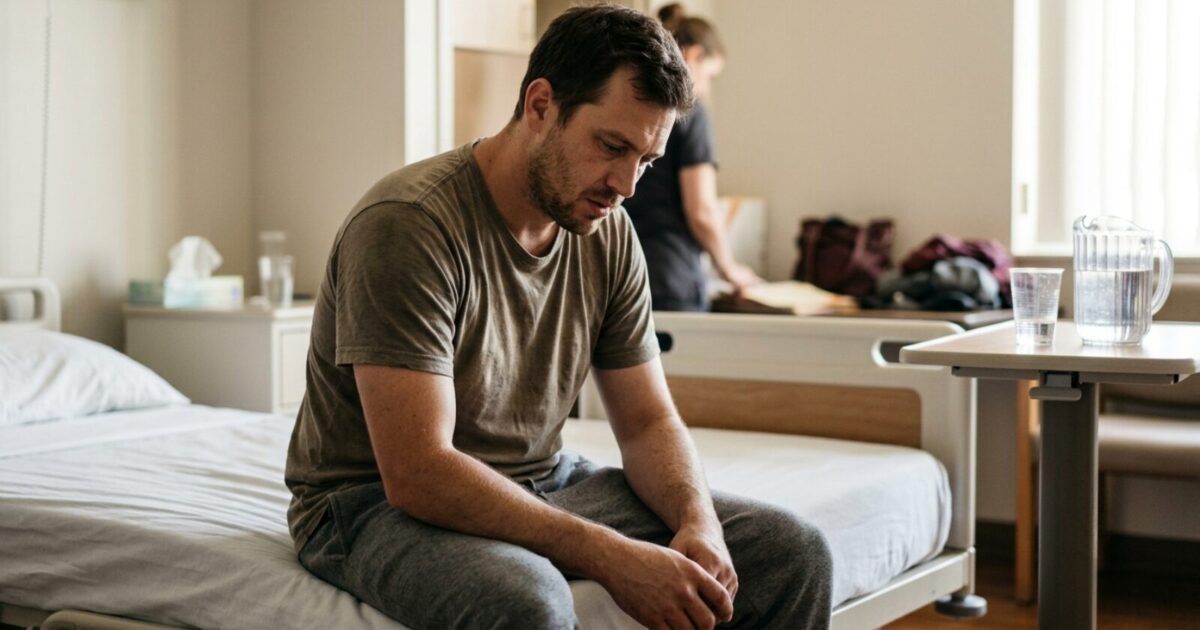
That silence costs lives. Men die from overdose and alcohol-related causes at significantly higher rates than women. They wait longer to seek help. They white-knuckle through more crises before they walk through a door like ours. Not because they don’t care. Because they’ve spent a lifetime being told that needing help is what weak men do. 

The Messages Men Carry 

From childhood on, most men absorb a consistent message: handle it yourself. Don’t ask. Don’t show weakness. Real men don’t fall apart. 

These messages are not neutral. They build a framework in which saying ‘I can’t stop drinking’ or ‘I don’t know how to get out of this’ feels like a violation of something core. Many men will endure extraordinary suffering before making that admission, because the admission itself feels more threatening than the pain. 

The irony is that this framework isn’t a strength. It’s the wall keeping men trapped. 

True strength, as every man in our community will tell you, takes far more courage than staying silent ever did. 

How Addiction Uses That Against Men 

Addiction is patient. It knows the scripts men run on. ‘I can handle this on my own. I just need to try harder. I’m not that bad yet.’ These aren’t moments of weakness. They’re the voice of the disease, using a man’s own self-image against him. 

Alcohol and drugs also solve a real problem, temporarily. If you’ve been trained your whole life not to name what you’re feeling, substances offer a valve. A way to be less without having to say what the less is. That’s why so many men describe their use as the only thing that made them feel calm, or normal, or like themselves, even as it was destroying everything around them. 

What Finally Makes Men Reach Out 

It’s rarely a logical decision. It’s an exhaustion decision. When the cost of maintaining the appearance of control finally exceeds the cost of letting it fall. 

Sometimes it’s a health crisis. Sometimes it’s a relationship ending. Sometimes it’s a quiet moment alone at 2am with nothing left to pretend. 

What research consistently shows is that men are more likely to reach out when they can do so without shame. When treatment isn’t framed as the place you go after you’ve failed, but the place you go when you’re ready to fight. When other men around them are honest about their own struggles. When they know what recovery actually looks like and that it doesn’t require giving up who they are. 

Why a Men’s-Only Program Changes Everything

Ranch House Recovery is built specifically for men. That’s not incidental. It’s central. 

In a men ‘s-only environment, the social performance that usually prevents honesty starts to fall away. There’s no need to appear capable or stoic for anyone. Men who would never crack open in a mixed group find they can do it here. In the presence of brothers who are doing the same work. Sharing the same hard mornings. Having the same honest conversations. 

The brotherhood that forms at Ranch House is one of the most frequently cited reasons our graduates say this program worked when others hadn’t.

“The moment I said ‘I need help’ was the most terrifying thing I’d ever done. It was also the most freeing.” 

Ranch House Recovery Resident 

What Actually Shifts When a Man Gets Here 

First, the relief. The relief of not carrying it alone anymore. 

Second, the discovery that honesty doesn’t destroy you. It expands you. Working the Twelve Steps, sharing in group, sitting with discomfort instead of numbing it. These practices reveal that the self doesn’t collapse when it’s seen. It grows.

Third, men find capabilities they didn’t know they had anymore. Patience. Empathy. The ability to care for something outside themselves. Our farm and animal care work is particularly powerful here. A man who shows up every morning to feed animals and tend crops builds something addiction had stolen: evidence that he is capable, and that his presence matters. 

For the Families Trying to Reach a Man They Love 

If you’re reading this as a partner, parent, or sibling, the resistance you’re encountering is not indifference. It’s fear, wrapped in pride, wrapped in a lifetime of messaging. 

Pushing harder rarely works. Meeting him in fear does. Framing the conversation around concern rather than accusation. Finding the right moment. And sometimes, the first step isn’t him picking up the phone. It’s you. 

Our admissions team works with families, too. Call us, and we’ll help you figure out how to have this conversation.

“I thought asking for help would make me less of a man. It made me more of one.” 

If you’re ready, we’re ready. Call Ranch House Recovery at (512) 525-8175 or contact us. You don’t have to figure this out alone. 
From Soil to Soul: How Therapeutic Farming Rebuilds Men in Recovery

How working the land rebuilds what addiction destroyed. 

There is something ancient in the idea that working the land heals something in a man. 

You plant a seed. You water it. You come back the next day and the day after that. Slowly, quietly, something grows. And in tending that growth, something in you changes too. 

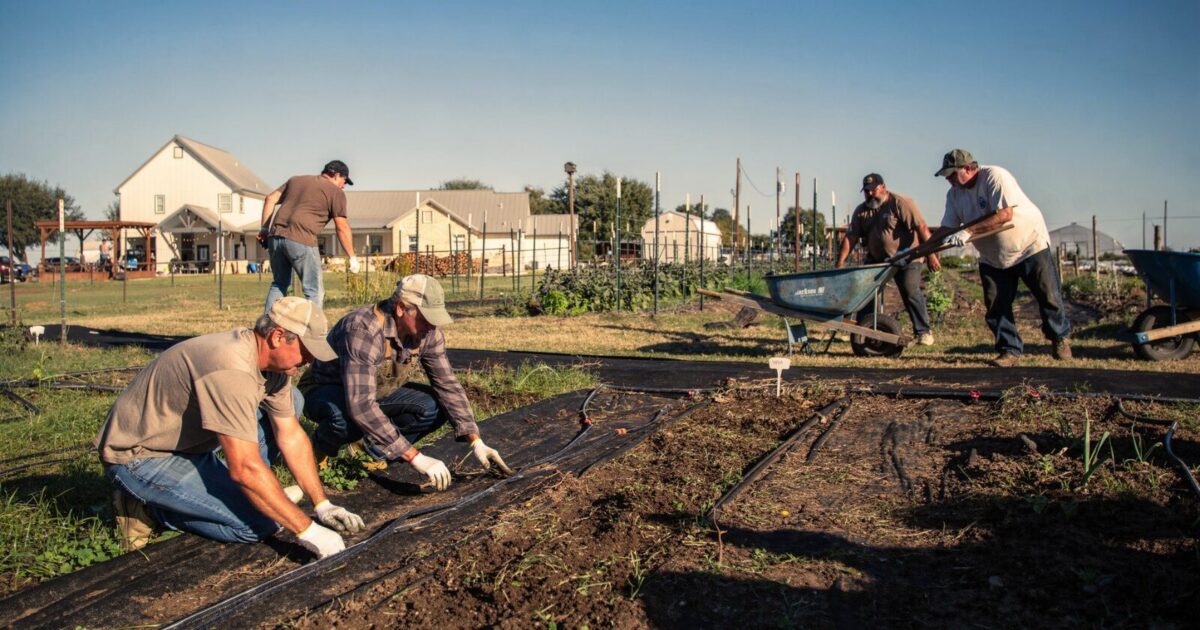
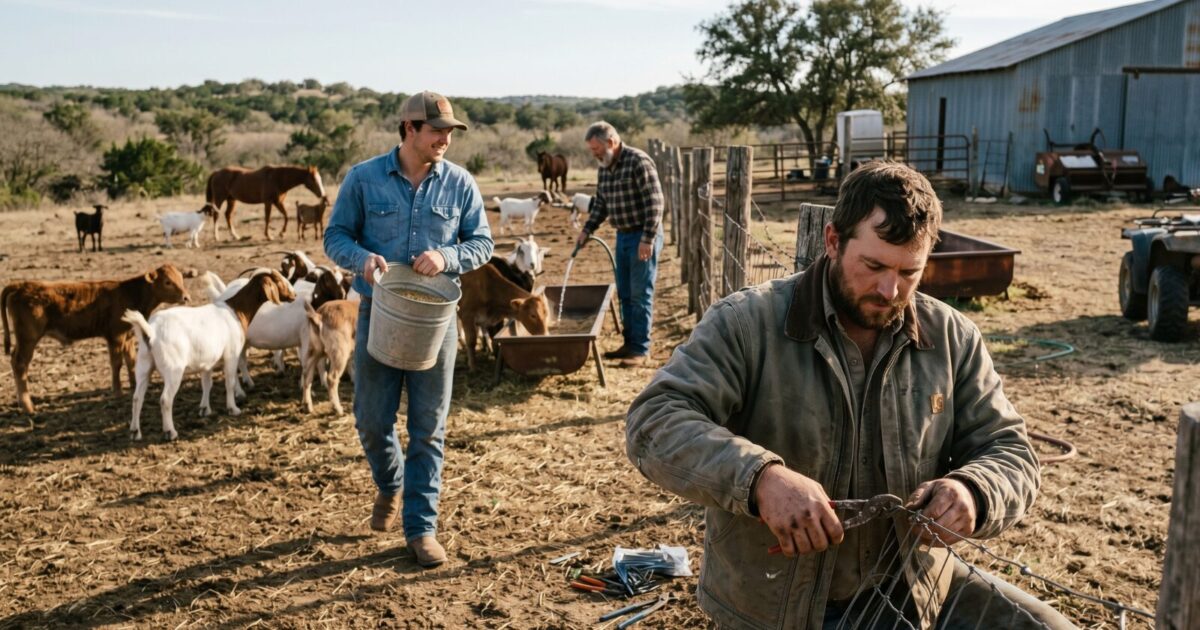
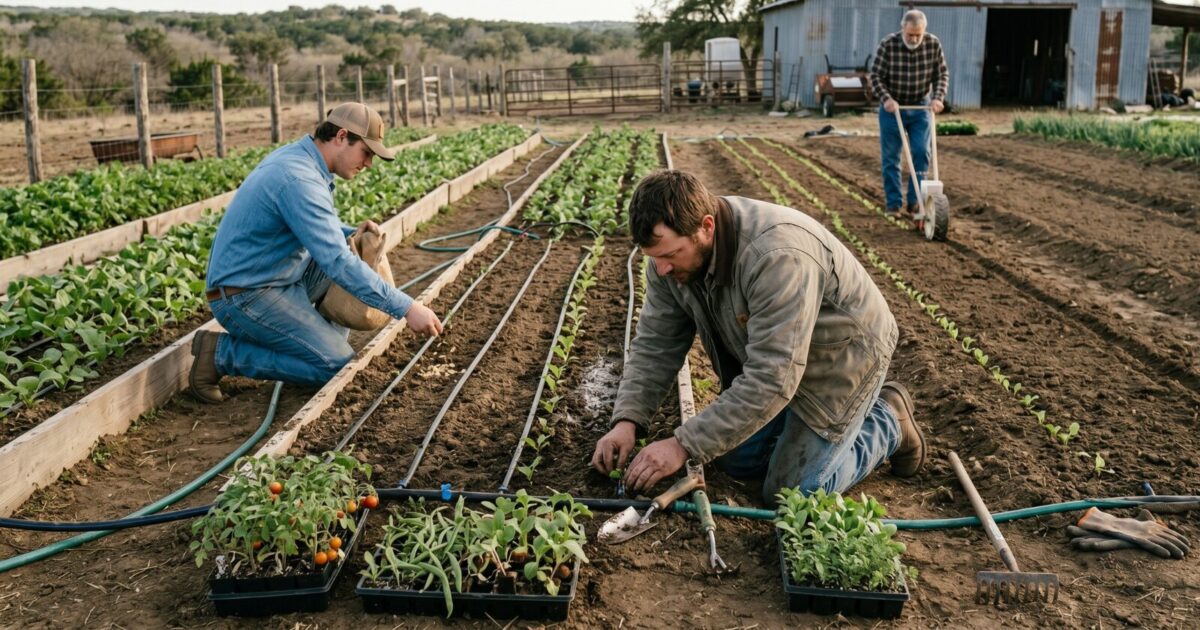
At Ranch House Recovery, therapeutic farming isn’t a metaphor. It’s daily work on a real Texas ranch. Through our partnership with Simple Promise Farms, a 501(c)(3) on the same property, our men tend crops, care for animals, and bring produce to local farmers’ markets. They do real work that produces real results in real time. 

Regenerative Farming and Regenerative Recovery 

The word regenerative in our model comes directly from regenerative agriculture. In regenerative farming, you don’t just maintain the soil. You restore it. Season after season, you make it richer, more alive, more capable of growth. 

We apply the same thinking to our men. 

We’re not trying to return a man to who he was before addiction. That version was already struggling. We’re working toward something better. More honest. More connected. More purposeful. More alive. The farm is where that transformation takes root in a man’s hands before it takes root in his heart. 

What the Farm Teaches 

Patience 

Addiction is a disease of impatience. The need for immediate relief, immediate reward, immediate escape. Everything about active addiction runs against the willingness to wait. 

Farming directly addresses this. A seed planted today won’t be ready for weeks or months. There’s nothing a man can do to make it grow faster. He can only tend it and trust the process. Over time, this forced practice of patience quietly rewires the expectation of instant gratification that addiction reinforced for years.

Accountability 

The farm doesn’t care what kind of day you’re having. The crops need water. The animals need feeding. The work doesn’t pause for moods, for excuses, for a rough night’s sleep. 

This is exactly the kind of non-negotiable structure that early recovery requires. Our men rotate through farm responsibilities so every man experiences both the weight and the satisfaction of this accountability. Showing up when it’s difficult, and then seeing that your showing up mattered, is the basic training of a sober life. 

Pride in Honest Work 

Many men who come to us have spent years doing things they’re ashamed of. The shame that accumulates from that history is one of the most powerful drivers of continued use. 

The farm offers something rare: the experience of pride in honest work. A man who plants, tends, and harvests a crop has done something real with his hands. He can see it. Touch it. Bring it to a farmers market and watch people buy it. The directness of that connection between effort and result is deeply restorative for men who have been living in the complicated unreality of addiction. 

Connection to Natural Rhythms 

Active addiction is deeply disconnected from the natural world. From seasons. From daylight. From the rhythms of effort and rest that human beings are wired for. 

Farm life reestablishes those connections. There’s a season for planting and a season for harvest. A time to work and a time to rest. This natural rhythm, so different from the chaotic urgency of active addiction, becomes a form of healing in itself. 

Farmers Markets: Recovery Goes Public 

One of the most distinctive parts of our program is the farmers’ markets. Our men bring produce grown on the ranch out into the community. They interact with neighbors. Answer questions. Represent not just Simple Promise Farms but themselves. 

This public dimension of the work matters. It breaks down the isolation and shame that accompany addiction. Men in recovery, doing real work, contributing to their community, being seen as neighbors and producers rather than as addicts. It builds social confidence. And it plants a different kind of self-image: men who grow things, who serve their community, who show up. 

“Simple Promise. Show up. Do the work. Keep your word.” 

Brandon Guinn, Founder of Ranch House Recovery

Simple Promise Farms: More Than a Garden 

Our therapeutic farming program operates through a formal partnership with Simple Promise Farms, a 501(c)(3) nonprofit that shares our Elgin property. This partnership means our farming component is genuinely substantive. Not a recreational garden. A working farm with real crops, real animals, and real community relationships. 

The name reflects a philosophy that aligns directly with recovery: simple, honest commitments kept day after day. The promise to show up. The promise to do the work. The promise to care for what’s been entrusted to you. 

“I planted those peppers when I first got here. By the time I left, I was harvesting them. I don’t know how to explain what that meant.” 

Ready to take the first step? Call Ranch House Recovery at (512) 525-8175 or contact us

Living the 12 Steps on a Ranch: How Ranch House Brings the Steps to Life

At Ranch House, the Steps aren’t discussed. They’ve lived.

A lot of men come to us having heard of the Twelve Steps. Some have sat through meetings. Some have worked the Steps with a sponsor. Some have the whole thing memorized.

And still, they relapsed.

Because knowing the Steps and living the Steps are two entirely different things. That gap between what a man understands in his head and what he actually does when the day gets hard is often where recovery breaks down.

At Ranch House, we closed that gap by design.

Why the Steps Get Reduced to Theory

The Twelve Steps were never intended as an intellectual exercise. They were created by desperate men who had tried everything else and found that working through a specific set of practices produced an inner transformation nothing else had. The original understanding was simple: the Steps have to be worked, not just understood.

But in many modern treatment settings, the Steps become content. Something to learn about, discuss, and check off. This happens because of time pressure, because clinical frameworks tend to favor cognitive understanding over experiential change, and because most treatment environments don’t have the physical space or community depth to let the Steps become a lived reality.

Ranch House was built, in part, to solve that problem.

Step One: Live Every Morning

Step One admitting powerlessness over addiction isn’t a one-time declaration here. It’s the orientation every morning.

Our men wake up on the ranch in early recovery. Often uncomfortable. Often facing cravings or difficult emotions. And they show up anyway. The farm requires it. The animals need to be fed regardless of how anyone is feeling.

That daily experience is not just discipline. It’s a lived practice of Step One: the old way of managing life through control and willpower is gone. In its place, a different set of principles takes hold.

Steps Two and Three: Surrender as Daily Practice

These Steps ask a man to come to believe in a power greater than himself, and to turn his will and his life over to that power. In most program settings, these get journaled about and moved past.

At Ranch House, they’re practiced in the rhythm of the farm and the community. A man who wakes up, cares for animals that depend on him, and participates in a community where his actions affect everyone around him is practicing Steps Two and Three in his body. Not just his mind.

The ranch teaches surrender not as passivity, but as the active choice to participate in something larger than oneself.

Steps Four and Five: Honesty With Roots

The Fourth and Fifth Steps, taking a searching and fearless moral inventory and sharing it with another person, require a quality of honesty most men in early recovery haven’t practiced consistently in years.

The community at Ranch House creates the conditions that make this possible. When a man has been living alongside the same group of brothers for weeks or months, eating together, working together, navigating conflict together, the relationships that form are deep enough to hold the truth.

Men who would never share their Fourth Step with a stranger find they can share it with a peer mentor who has been walking beside them through daily life.

Steps Six and Seven: Becoming Willing

Step Six asks a man to become entirely ready to have his defects of character removed. Step Seven asks him to humbly request that removal.

These are the Steps that most programs rush past. They’re not dramatic. They don’t involve action in the obvious sense. But they are where the inner shift actually happens, and they require something that early recovery rarely allows: stillness.

Life on the ranch creates the conditions for that stillness. There is time here, in the rhythm of farm work and morning practice, to sit with the question of who you’ve been and whether you’re willing to be different. Not just to understand it intellectually. To feel it. To mean it.

We’ve watched men reach Step Six having never actually asked themselves whether they wanted to let their character defects go. Some of those defects, the control, the pride, the isolation, kept them safe for years. Releasing them takes more than a moment of insight. It takes the willingness that only grows through repeated honest practice.

At Ranch House, that practice is available. Every day.

Steps Eight and Nine: Amends as a Way of Living

At Ranch House, these aren’t items on a checklist. They’re part of the continuous fabric of community life. Men who live together inevitably cause small harms: a thoughtless word, a broken agreement, a failure of consideration. Our culture treats these daily occasions as practice for the larger amends work. Real-time, with real people, in a real community.

Our Service Work Saturday program carries this spirit outward. Men doing direct service for Elgin neighbors and local nonprofits is a living expression of making amends, rebuilding their relationship with the world around them.

Steps Ten and Eleven: The Daily Maintenance

Step Ten, continuing to take personal inventory and admitting when wrong, is the Step that keeps recovery from being a one-time event. It’s the practice of staying current: with yourself, with the people around you, with what is actually true today.

At Ranch House, Step Ten happens in real time. When a man snaps at a housemate, he doesn’t carry it. He addresses it. When he notices resentment building or dishonesty creeping in, he names it in a meeting with a mentor, in the daily reflection that ends each evening. The inventory isn’t a quarterly exercise. It’s a daily posture.

Step Eleven, seeking through prayer and meditation to improve conscious contact with a higher power, is where our spiritual practices come into full view. Yoga, breathwork, sound baths, the Wim Hof method, sweat lodge ceremonies, morning meditation: these are not extras layered on top of the program. They are Step Eleven made physical.

Many men arrive at Ranch House sceptical of anything that sounds like meditation or prayer. By week three, most of them are the ones who show up first. Because something happens when you practice these things consistently inside a community that takes them seriously. The noise quiets. The direction becomes clearer. The sense that there is something worth staying sober for, something larger and more real than the next craving, begins to feel true.

That’s Step Eleven. Not as a concept. As an experience.

Step Twelve: The Whole Point

Carrying the message to others and practicing these principles in all our affairs: this is what the entire Ranch House model is built around.

Our peer mentorship program is a direct expression of Step Twelve. Men further along in recovery walk alongside men just beginning. They share their experience, strength, and hope. Not as a professional authority. As brothers who have been there.

Many of our staff members are themselves in recovery. They don’t stand apart from residents. They participate in the work, the service, the spiritual practices, and the community.

That’s what Step Twelve looks like when it becomes a way of life.

“We’re not teaching the Steps here. We’re living them. Every day, in everything.”

— Brandon Guinn, Founder of Ranch House Recovery

The Daily Schedule as a Twelve-Step Life

Morning animal care. Group activities. Therapy sessions. Farm work. Evening meetings. Communal meals. Saturday service. This schedule isn’t designed to keep men busy. It’s designed to make Twelve Step living a daily reality rather than a weekly meeting.

Every aspect of the day is an opportunity to practice the principles. Honesty in conversation. Humility in work. Service in the community. Surrender in the face of difficulty. Gratitude for the smallest things.

The Steps are not seven sessions in a workbook. They are the texture of a life lived differently.

“I’d ‘worked’ the Steps twice before. This was the first time I actually lived them.”

— Ranch House Graduate

Ready to experience the Steps in a new way?  Call (512) 525-8175 or contact us.